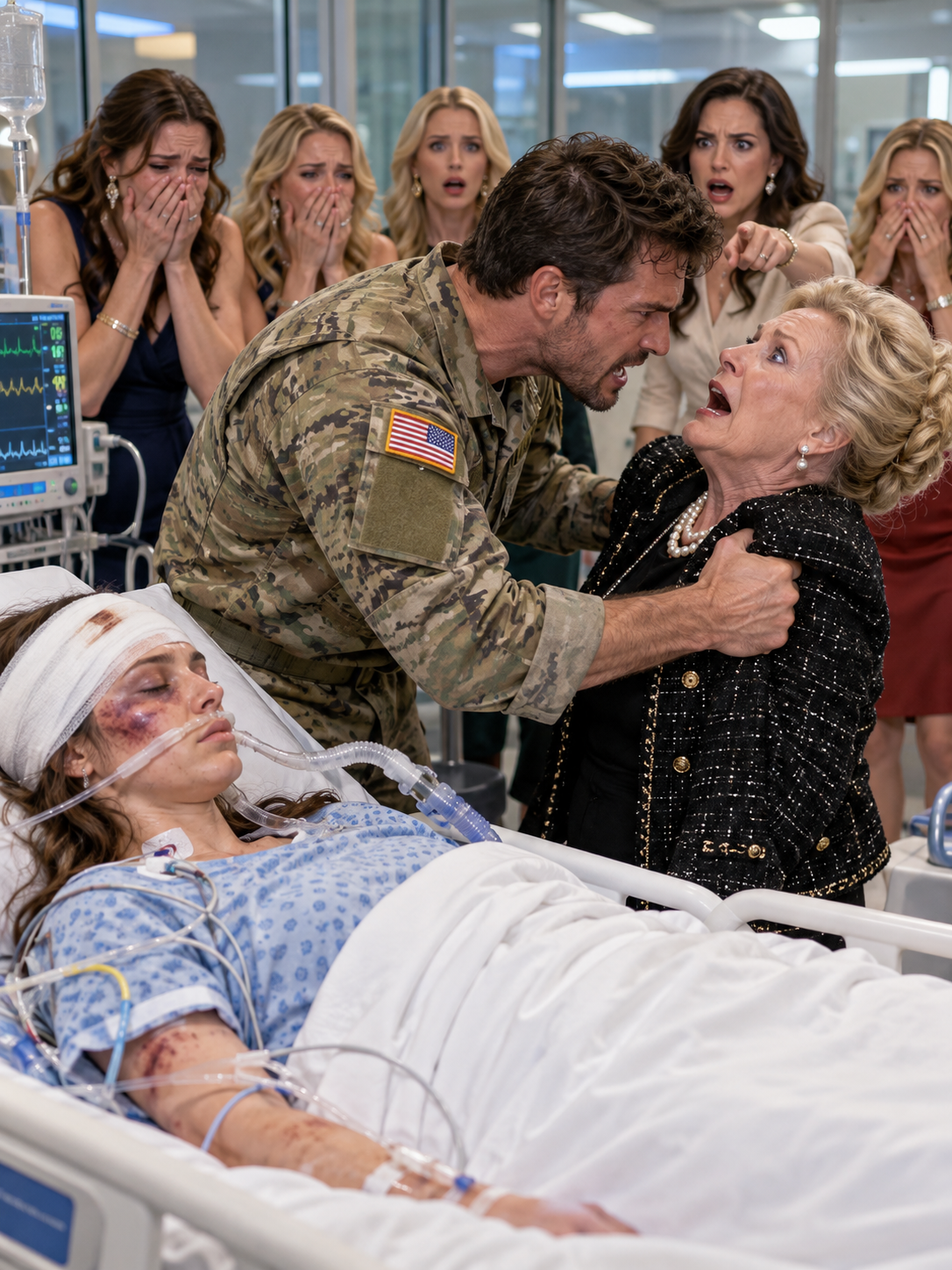
At 7:30 p.m. on a Tuesday, I was sitting beside my four-year-old son's bed in the Pediatric Intensive Care Unit, watching his tiny chest fight for every single breath. Leo had been running a fever for almost thirty-six hours, and twenty minutes earlier the thermometer had spiked to 104.2 degrees. An oxygen mask covered half his small face, an IV line was taped to his arm, and a pulse oximeter was clipped to a finger so small the blue medical tape nearly swallowed it.
Every rhythmic beep from the monitor went straight through me. "Come on, baby," I whispered, squeezing his hand. "Breathe. Mommy's right here."
My husband Patrick sat on the other side of the bed, still in his work boots and flannel shirt, sleeves rolled up from a full day of repairs at a client's house. To my family, that was all he would ever be: the mechanic. My mother called him that to his face. My younger sister Bianca made fun of our small apartment, our used car, even the modest ring Patrick had saved eight months to buy me. He never argued back. He just kept showing up, fixing things, holding our life together.
The Phone Call I Will Never Forget
My phone buzzed against my hip. It was my mother. I answered in a whisper, expecting concern, maybe a prayer offered over the line. Instead I got an invitation.
"Don't forget Bianca's party is Saturday," she said. "Fifty people confirmed. The caterer needs a final count by tomorrow."
"Mom, Leo is in the ICU. He has pneumonia and possible sepsis. I cannot think about a party right now."
There was a pause, and then she said the sentence that rearranged something permanent inside me. "Your sister only turns eighteen once. Leave him with your husband. He is not going anywhere."
He is not going anywhere. I looked at my son's chest rising in shallow, ragged jumps and understood that my mother genuinely could not tell the difference between a child who might not go anywhere and a child who was simply staying overnight in a hospital.
What Patrick Did Next
I did not argue. Arguing with my mother for thirty years had produced exactly nothing. Instead, I looked at my husband and handed him the phone. Patrick is not a dramatic man, but he has a very precise understanding of how things work, because he has spent his life dealing with contracts, invoices, and people who do not honor their word.
"Carol," he said calmly, "the pediatric intensivist just told us Leo's oxygen levels are unstable. If he deteriorates tonight, the hospital will need a parent's signature within minutes. If neither parent is here, they will treat him anyway, and they will also call protective services to ask why both parents chose a birthday party over a critical care unit. Is that the story you want told at the party?"
The silence on the line was so long I could hear the monitor beeping through it. Then my mother, softer now: "That is a horrible thing to say."
"It is a horrible night," Patrick replied. "We will celebrate Bianca when our son is home. I will even cater it myself. But nobody in this family asks Claire to choose again."
He hung up and took my hand. The smile my mother had been wearing all week, the one she had worn while planning centerpieces, was gone by morning.
The Longest Night
Leo worsened at 2 a.m. His fever climbed, his breathing went shallow, and a team of four moved around us with practiced speed. I signed forms with shaking hands while Patrick held my shoulders and repeated one sentence: "You are here. That is what matters. You are here."
By sunrise, the antibiotics had begun to turn the tide. The intensivist told us that catching the deterioration when we did, with a parent present and able to approve immediately, had made a genuine difference in how quickly they could act. I have thought about that sentence many times since. My mother thought my presence was optional. Medicine thought otherwise.
The Party Went On Without Us
On Saturday, fifty relatives gathered under string lights while Leo slept in a hospital crib three towns away. Relatives texted me photos. Not one of them asked how my son was doing. Bianca, to her credit, did ask, once, in a single message. Then she posted a video of her cake.
Something in me closed that weekend, quietly and completely. I stopped making excuses for my family. I stopped explaining Patrick to people who had decided what he was before they ever watched him sit through a night like ours.
What I Know Now
Leo came home nine days later, thin and pale and back to himself within a month. The first thing he asked for was pancakes, which Patrick made in the shape of a dinosaur. My mother called during the pancakes. She wanted to talk about how hurt she had been by Patrick's tone. I told her the truth, gently: the party had happened, the family had survived, and the next time one of her grandchildren was in a hospital bed, she could decide for herself where to be. She has not raised the subject since.
People tell me I should forgive, that she is from a different generation, that she simply did not understand. Maybe. But I watched a man in work boots and a flannel shirt hold my family together with steady hands while everyone who ever called him the mechanic failed to show up. I know exactly who my family is now. It is the three of us in that ICU room, and it always will be.