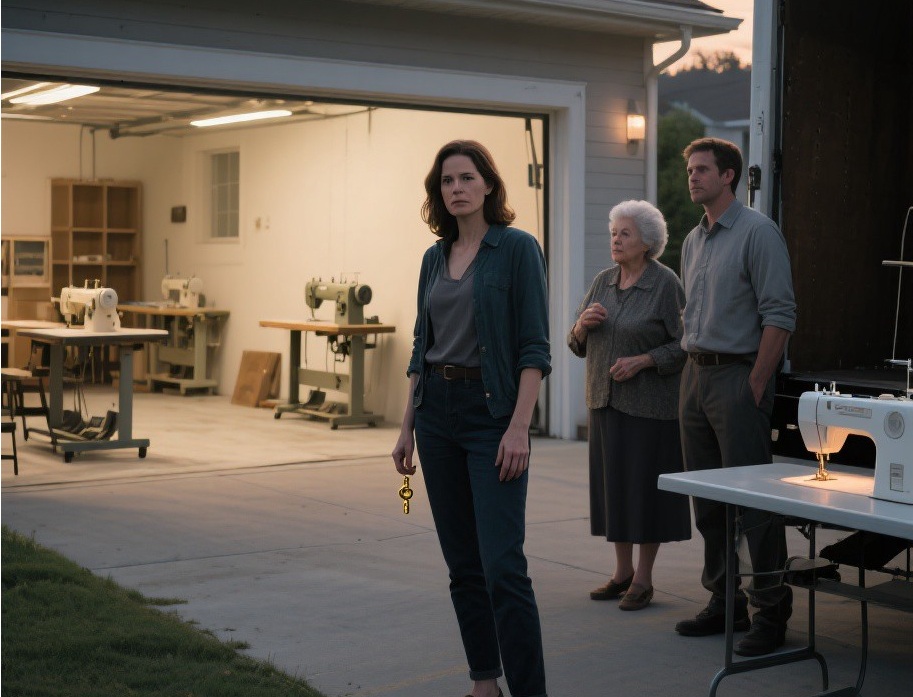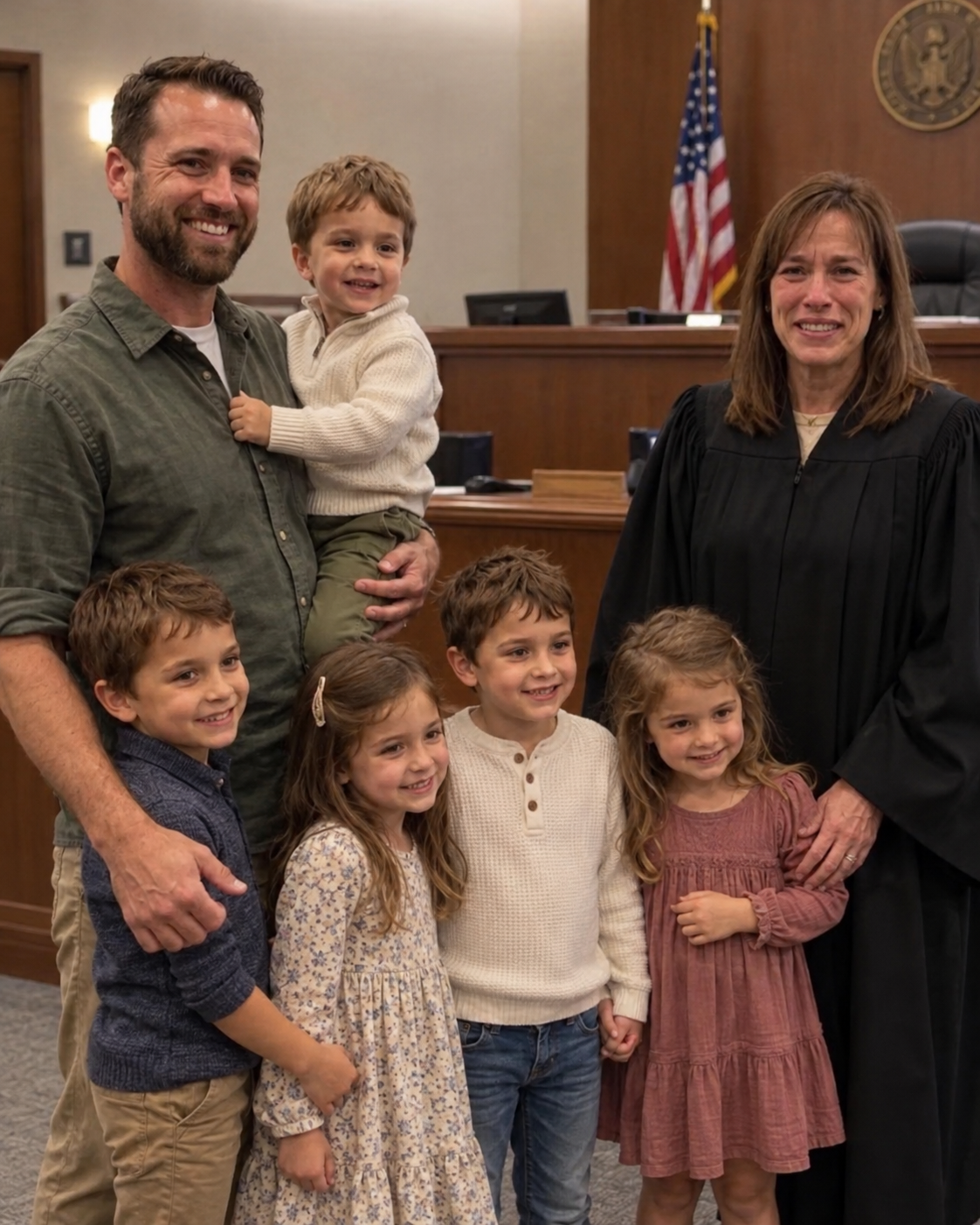
The county's file on Mason listed everything he did not have: a wife, savings, parenting experience, a spouse to share the load. He was twenty-nine, a single carpenter with a modest workshop, a mortgage he could comfortably afford, and a quiet life he had built exactly to his own measurements. What the file could not record was the one qualification that decided the case, which was that he already knew what happens to children who are separated from each other.
He found the five of them on a computer screen in his workshop on a rainy Tuesday afternoon. They were listed on an emergency placement registry: all biological siblings, all under the age of seven, and unless someone stepped forward immediately, they would be scattered into foster homes across two counties.
Five Faces He Could Not Unsee
Mason stared at the screen for several minutes. He did not know their favorite foods, which one was afraid of the dark, or which one needed a night light. He knew only what the registry photo showed: five small faces pressed close together, the oldest boy's arm wrapped protectively around the youngest girl.
He picked up the phone and called the child welfare department directly. "I want to apply to take all five of them," he said quietly.
"I am sorry, but that is simply not possible," the social worker replied without hesitation.
"I have a home, I have income, and I am fully willing to be evaluated," he insisted.
Three weeks later, against every expectation, he was sitting in the Pinellas County Family Court, watching those five children cling to one another on a cold plastic bench.
The Hearing That Looked Like an Ending
The state's plan was laid out in flat, procedural language. Three separate foster homes across two different counties had been secured, and if the allocation was not finalized that day, the children would be separated by the end of the week. Seven-year-old Caleb kept a firm arm around three-year-old Nora while the four-year-old twins held hands so tightly their knuckles whitened. The five-year-old sat perfectly still, the way children do when they have learned that stillness is safety.
Mason's application had cleared the background checks and the home inspection, but the caseworkers raised the predictable objections. Single parent. No parenting experience. A workshop full of tools. No spouse to share the load. By every practical measure on the page, his was a lost cause.
The Question That Changed the Room
Then the judge asked the only question that mattered. Why would a single man with no connection to these children upend his entire life?
Mason's answer reframed every objection in the file. He had been one of those children. Thirty years earlier, he and his own siblings had been separated in that same courthouse, by some of those same institutions, and he had spent his childhood shuffled between homes carrying the belief that his brothers and sisters had been taken because he had not been strong enough to hold on. He had found two of his siblings as an adult. He was still looking for the others.
"I can't give them money or a big family," he told the court. "But I can promise them one thing nobody gave me. They will never spend a single night wondering if their brothers and sisters are okay. I know exactly what that wondering does to a kid. I did it for twenty years."
The judge removed her glasses and paused for a long moment. Several observers in the gallery noticed her eyes were wet. Whatever the caseworkers had written about tools and spouses, none of it answered a man who could describe, from the inside, the exact damage the state was about to repeat.
Building a Family From Scratch
Approval did not come instantly. There were trial placements, home visits, and skeptical reviews. Six months later, five bunk beds stood in a three-bedroom house that had never heard a child's laughter.
Mason scaled back his workshop hours and learned to braid hair on YouTube. Caleb appointed himself deputy head of the household and inspected the locks every night, just in case. The hard days were real: nightmares, snacks hoarded under pillows, a boy who flinched at raised voices. Mason hired a trauma-informed counselor, joined a single-adopter support group, and measured progress in small victories, the first voluntary hug, the first time Nora called him by name instead of looking at the floor.
One Year Later, Same Courtroom
The final adoption hearing took place on an ordinary weekday morning. The same judge asked each child, in age-appropriate terms, whether they understood what was happening. Caleb stood up, straightened his clip-on tie, and said, "We're staying together. Forever. That's what today means."
The courtroom applauded. The judge, visibly moved again, signed the order and added something unofficial: of the thousands of cases she had heard, she could count on one hand the moments she believed had changed the trajectory of a family. This, she said, was one of them.
The Job He Still Does
Mason still builds furniture for a living, though his workshop is smaller now, squeezed into evening hours after bedtime stories and school lunches. When people ask why he did it, he gives the same answer he gave the judge. "Somebody has to be the one who doesn't let go. That's not a hero thing. It's just the whole job."
The county's file, wherever it sits now, still lists a single carpenter with no wife and no experience. It has never been able to record the thing that made him the right person, which is that he could tell a courtroom exactly what a separated child carries into adulthood, because he had carried it himself for twenty years. Five children sleep under one roof tonight. That is the only line in the file that matters.