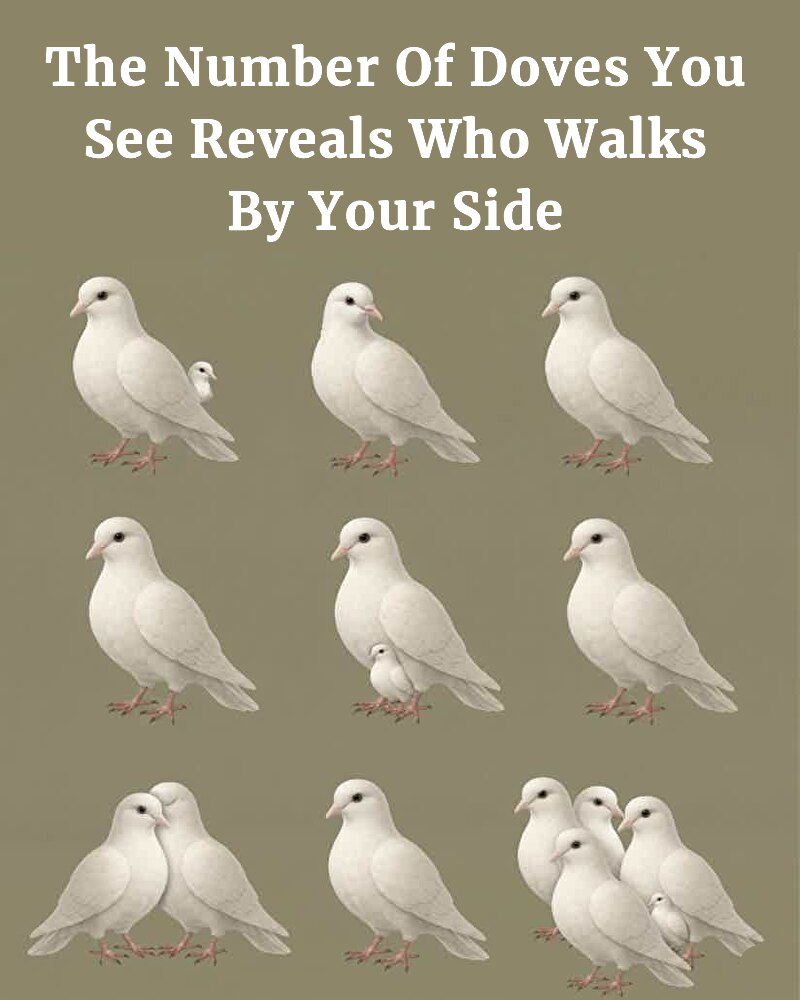
Optical illusions work because your brain hates an incomplete story. Show it ambiguous shapes and it starts improvising — filling gaps with memories, emotions, and pattern-hunger until meaning appears. Faces are its favorite improvisation. Which is why the counting illusion currently circling the internet — one image, a hidden multitude of faces, and a claim that your total reveals your nature — has everyone staring at the same picture and reporting wildly different realities.

Why We All See Different Numbers
The variance isn't about intelligence or attention effort — it's about perceptual style. Your brain is a prediction machine that resolves uncertainty using priors: experience, expectation, mood. When an image is deliberately vague, those priors take the wheel. Faces are the most powerful trigger of all, because humans come preinstalled with a dedicated face-detection system that fires on minimal evidence — two dots and a curve will do.
So in the same drawing, one person's visual system politely accepts the obvious figures and stops. Another's keeps finding faces folded into shadows, branches, and negative space. Both are telling the truth about what happened inside their own perception.
What Your Count Is Said to Suggest
One to three faces: the test assigns you the clarity-seeker. You cut through noise — visual and emotional — and concentrate on what matters. In life, this reads as structure, directness, and a preference for the headline over the footnote. Friends describe you as decisive; you'd call it efficient.
Four to six faces: the balanced perceiver. You see the main picture and remain willing to explore its details when it pays. This profile is linked to emotional awareness — reading between lines, sensing moods before they're spoken. You're the person who notices the colleague's bad day under the good meeting.
Seven or more faces: the imaginative detector. Your perception runs hot on subtlety — patterns, hidden elements, the thing in the corner nobody else clocked. In creative and social settings, that's a genuine superpower: you catch subtext, context, and connection at machine speed. The trade-off, the test admits, is over-processing — a mind that finds faces everywhere also finds problems everywhere.
The Honest Disclaimer, Stated Properly
No, the count doesn't define your personality — these images are entertainment, not assessment, and no peer-reviewed scale correlates hidden faces with character. But the test survives because its central claim is literally true: perception is personal. The same image producing different honest reports is a miniature demonstration of how two people can experience the same event, conversation, or photograph and emerge with different versions — each accurate from inside their own head.
Try It on Someone Else
The illusion's best feature is social. Ask a friend how many faces they see before revealing your own number, and watch the negotiation that follows: "Where? Show me. That's not a face. …Okay, now I can't unsee it." Within two minutes you've watched another person's entire perceptual system operate differently from yours — a humbling, delightful experiment in how little we can assume about shared reality. Once you've seen that, the counting stops mattering and the insight takes over: everyone sees a different world. Illusions just make it visible.
The Faces You Probably Missed
For those demanding inventory from this particular image: the obvious faces sit front and center, but most versions hide the interesting ones in the trees' negative space, the shadows between branches, and — the crowd favorite — one face formed entirely by two leaves and a gap that your brain swears is a nose. People reporting seven or more typically found those; people reporting two or three looked directly at them and classified them as foliage. Neither is wrong. But the difference between the two groups, demonstrated on one drawing, is the difference between scanning for confirmation and scanning for possibility — a distinction that applies to far more than illusions.
The Unseeability Problem
The illusion's cruelest feature arrives after the counting: once you've found eight faces, you can never go back to seeing two. Perception researchers call this hysteresis — the visual system's tendency to stay loyal to interpretations it has committed to. It's why 'unsee' is a real experience and not a joke: the brain doesn't retract, it accumulates. Practically, this means your first count is a genuine measurement of your resting perception, and your last count is a measurement of your patience. The test, like most illusions, is really two tests — one of your mind's defaults and one of your willingness to override them. Most people only pass the second one after arguing about the first.
The Final Count
So — how many did you see? Two, eight, or a number you're still defending? Whatever your total, you've now participated in the oldest experiment in psychology: proof that reality, filtered through different minds, arrives differently. The faces were always there or they weren't. The perception was always yours. And the world, as this humble image demonstrates one more time, looks exactly as different as the people looking at it. Count accordingly.