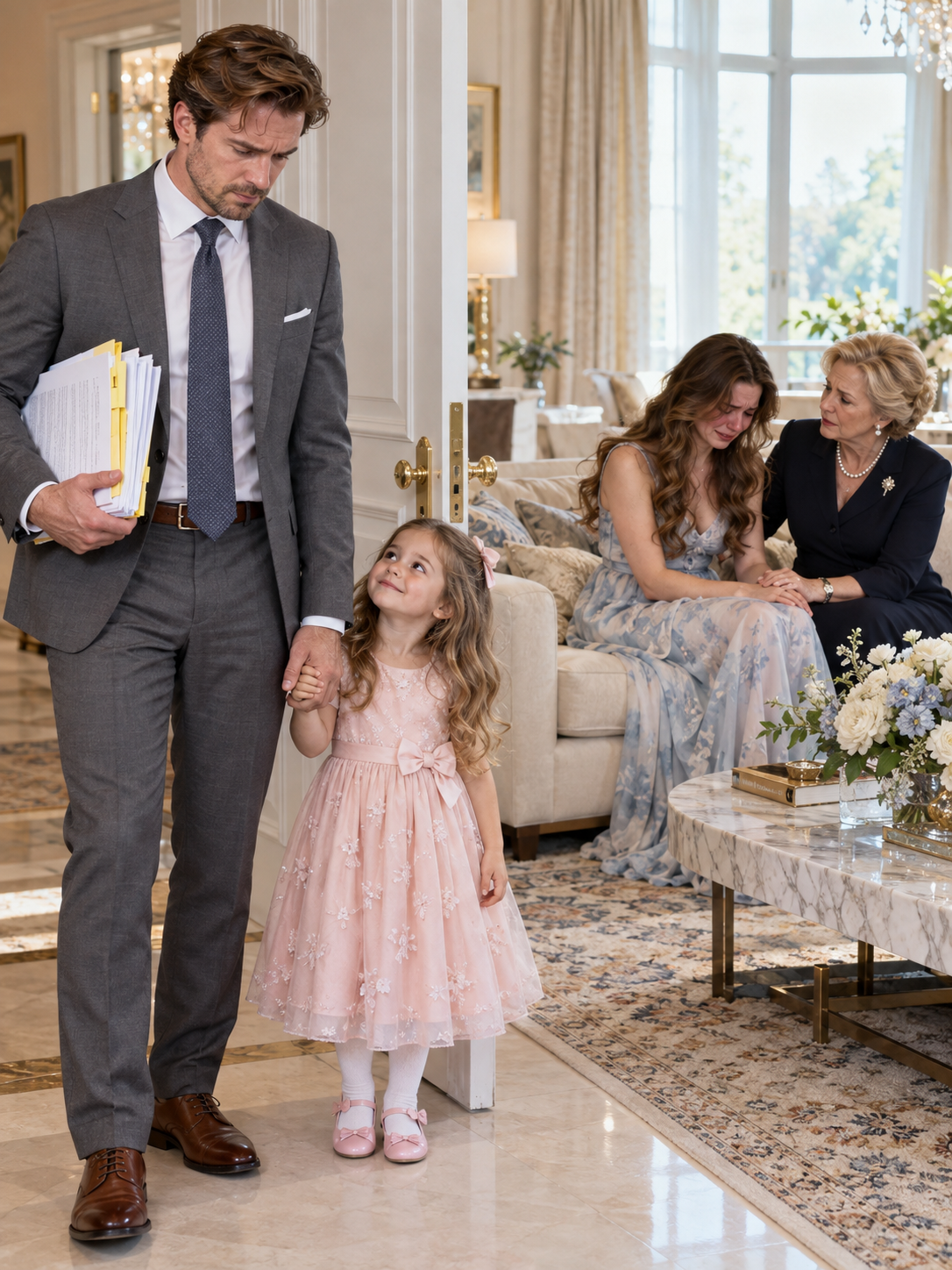
The night before I was scheduled to finalize my divorce, I stood frozen in the hallway of my own home with twenty-seven pages of divorce papers and a twenty-million-dollar financial agreement in my hands. My wife was weeping softly in the living room, and I had spent three years certain I knew why she had married me. What I heard through that door proved that the case against her was something I had built myself.
A Marriage Built in a Boardroom
I met Vivian at the lowest point in her family's history. Her father's company, a manufacturing business he had built over thirty years, was drowning: a bad expansion, a lawsuit, a bank breathing down their necks. I was thirty-four, liquid, and looking for something to do with money that had begun to feel like an obligation.
I arrived at our first meeting with spreadsheets. She arrived with a legal pad and the composure of someone who had been holding her family together for months. That difference should have told me something about which of us was really doing the assessing, but I was too pleased with my own numbers to notice.
I invested, and the company survived. Somewhere in the eighteen months of restructuring meetings that followed, I asked her to dinner. She said yes with a hesitation I conveniently chose not to read. We married eleven months later, in a ceremony her mother planned. Even I could hear how that sounded.
Three Years of Reading Silence
The belief that she had married me to save her family's business did not arrive on its own. It was handed to me in pieces, and I kept every one of them.
At our engagement party, a cousin of hers joked, loudly enough for me to hear, "Well, the company's saved then, isn't it?" Everyone laughed. Vivian did not correct it. When my mother raised doubts before the wedding, Vivian's careful defense, "I have my own reasons," sounded like an admission. When we argued about money, she went quiet in a way that felt like a ledger being balanced. And when I told her, one anniversary, that she could have anything she wanted, she answered with something I twisted for three years: "I already have more than I ever expected to have."
I read that as: the transaction is complete. What I should have read was a woman whose expectations of life had been shrunk by years of crisis, for whom "more than I expected" was not a price but a surprise.
I was an analyst by profession and a coward by temperament. I built the thesis that she had settled for me, then spent three years collecting evidence for it and discarding everything that contradicted it. The way she kept my favorite soup recipe taped inside a cabinet. The night she fell asleep waiting up for me and I stepped over her like she was furniture.
The Papers
By the third winter, I had convinced myself that releasing her was the noblest thing I could do. My lawyers drafted a settlement my own accountant called excessive: twenty million dollars, our waterfront property, complete financial independence for life.
If she married you for security, give her so much security she can never be hurt, I remember thinking. It did not occur to me that a man who believed that could have simply asked her. I signed the papers at my office and brought them home in a leather folder.
That was the night I stood in the hallway.
What I Heard
She was on the phone with her mother, and she was not angry. She was grieving, the careful kind that comes from trying not to be heard. "I love him too much to ask him to stay just because he feels obligated, Mom," she said. "If he genuinely believes he will be happier without me, I have to respect his choice and let him go without making a scene." A pause. Then, quieter: "Yes. I know what everyone said back then. That's exactly why I can't say anything now. If I fight for him, it proves them right."
I leaned against the doorframe, and the folder in my hands went weightless. She had always known what people whispered, that she had married the rescue money, and she had swallowed it for three years because defending herself would look exactly like confirming it.
The only person in that marriage who never questioned why she loved me was me. I had spent three years cross-examining the one witness who refused to testify.
The Conversation We Finally Had
I walked into the living room holding the folder. She saw the papers, closed her eyes like a woman bracing for a blow, then opened them and smiled at me anyway, that terrible, generous smile.
"I'm not signing these," I said. She started to speak, and I stopped her, because I owed her the whole confession: every assumption, every misread silence, every time I had chosen the cynical interpretation over the true one. I told her about the hallway. She cried.
Then she told me her side, which was worse to hear. The loneliness of being accused of mercenary motives by a man who never once asked her why she loved him. "You never asked," she said, and that was the sharpest sentence of the night.
What Happened After
The papers went into the fireplace, uncounted. The settlement money, on her insistence, went mostly into her father's business, which is now profitable enough that nobody needs rescuing. We started seeing a counselor, not because we were broken but to relearn plain words after three years of silence.
The marriage is better now because it is built on questions I actually asked instead of answers I invented. Some nights I still think about that folder, twenty million dollars and a waterfront house, undone by one sentence overheard through a door: I love him too much to ask him to stay out of pity.
She never pitied me. The only pity in that house was what I felt for myself, dressed up as generosity and signed in ink. If you take one thing from a stranger's mistake, let it be this: when you find yourself certain about someone else's motives, put down the evidence file and walk into the room. The answer is usually already there, hoping you will ask for it instead of reconstructing it from the hallway.