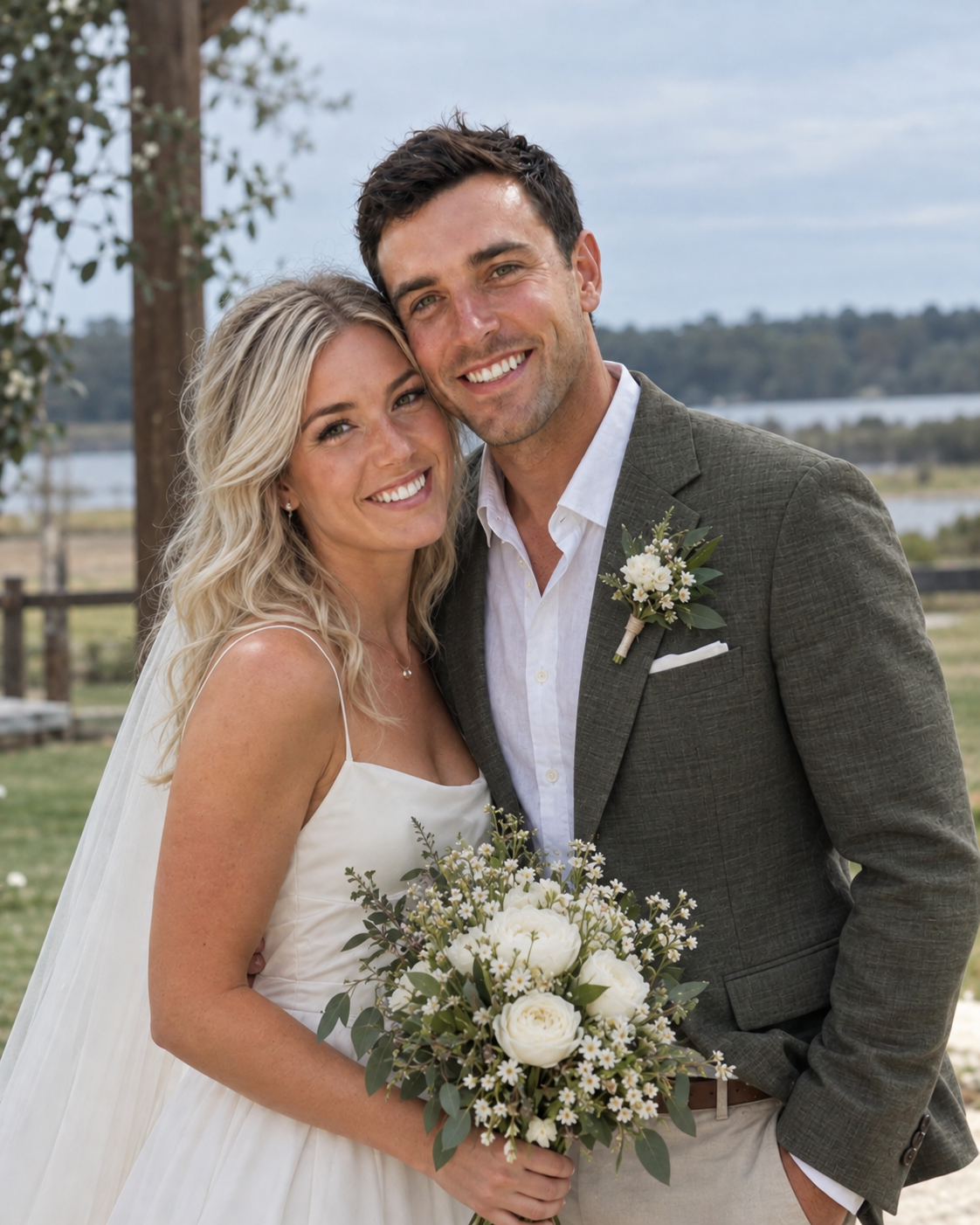
The morning after my wedding, I pulled a man's wedding band out of my new husband's tuxedo pocket, and it was engraved to someone else. Callum had spent four years proving he had nothing to hide. That was the trick, and it worked right up until I put my hand in his jacket. I woke up happier and more certain about my future than I had ever been, and within minutes that certainty turned to cold fear.
Callum was still buried under the duvet three feet away, one bare arm thrown over the pillow I had just left. I did not dare look down at my hand yet, because what I was holding was small, tangled, and impossible to explain away as nothing.
My name is Tessa. I am twenty-seven, and until that morning I would have sworn I had the least dramatic love story among my friends. My early twenties were a masterclass in reading liars. One ex kept a burner phone in his glove box. Another introduced me to his "cousin," who turned out to be his actual fiancee. By the time Callum walked in four years ago, I was less interested in chemistry than in evidence.
He refused to be complicated. "I don't do secrets," he told me on our third date, sliding his unlocked phone across the table. "It is too exhausting to lie, so let's keep everything open." For four years we shared passcodes, calendars, and bank alerts. Or so I believed, completely, which is a different thing from being right.
Three Small Things in a Pocket
The items tangled between my fingers were small, but they rewrote my life. First, a woman's hair tie I had never seen, the kind Callum claimed to hate on principle. Then a receipt from a hotel two towns over, dated the night before our wedding, for a single room and champagne, charged to a card that was not his. And finally, folded into the lining, a tiny velvet box that should not have existed at all.
Inside the box was a man's wedding band, engraved: "To my husband, always — M." Not my initial. Not our date. A different name, a different vow, bought and carried into our wedding like a stone sewn into a pocket. I sat on the edge of the bed and replayed four years looking for the seam.
The Performance I Almost Believed
I thought back to every proof he had offered, and the proofs were the problem. If a female coworker texted past nine, he showed me the thread before I asked. He volunteered his location with a cheerfulness that now reads as rehearsed.
The openness was not honesty. It was a costume, and a good one, because it gave me no reason to look. A man who hands you his passcode is telling you the passcode is the whole story. I stopped checking, the way you stop checking a lock after someone shows you the key.
The woman behind the initial was not hard to find once I looked. A search of the name plus his workplace turned up a shared address, a joint photo from a year prior, and an anniversary post he had liked under a fake account. Callum had been living a second, full life beside ours. Our wedding, with its courtyard and its fairy lights, was simply the part he performed for the people who knew me.
The Box on the Nightstand
I dressed without waking him and set the box on the nightstand where he would see it the moment he reached for his phone. Then I waited, because I wanted to watch him understand that the performance was over.
When he finally sat up, the color drained from his face. "Tessa, it's not what it looks like," he said, the oldest sentence in the book, delivered by the man who had built his whole appeal on never needing it.
"It looks like a wedding band with another woman's name, booked the night before we married," I said. "You told me you didn't do secrets. You were the secret." He reached for my hand, then thought better of it. There is no recovery from being caught wearing two marriages at once.
I did not scream, though he had earned it. I walked out of the suite and started undoing the marriage, quietly and fast. The paperwork would take longer than the truth. The truth was already decided in that doorway: I would not be his wife by nightfall, and I would not pretend for a single guest.
Two Women and One Actor
I contacted M that afternoon and sent her the photo of the band. Her reply came quick, relieved, and angry, the reply of someone who had also suspected the story and had been waiting for a second witness. We were two women married to the same gifted actor. The only honest thing he ever gave either of us was the evidence he carried in his pocket.
We are not friends, exactly. We share the same contempt for the same performance, which is its own strange closure.
The guests were refunded. The flowers were donated. Callum, last I heard, is explaining to two households why "open" meant something different to him than it did to us.
What I Kept, and What I Threw Away
I kept the velvet box for a while as a talisman, then threw it out on a Tuesday, appropriately unceremonious for an object that had never meant anything true. What I kept instead was a rule I now apply to everyone, not just men with unlocked phones: consistency is the only evidence that counts. Anyone can show you a phone. Very few people can show you the same story in every room they walk into.
The wedding became a story I tell with a wry smile rather than a wound. That is not because it stopped hurting quickly. It is because the proof arrived before the vows had cooled, and I did not spend years assembling a case against a man I had already promised my life to.
I looked. I found. I left. That was the whole marriage, and it was enough to set me free. If there is anything I would hand to the version of me who woke up happy that morning, it is this: the person who insists loudest that he has nothing to hide is often the one who has hidden the most, and the kindest thing a liar ever does is leave the evidence somewhere you might reach.