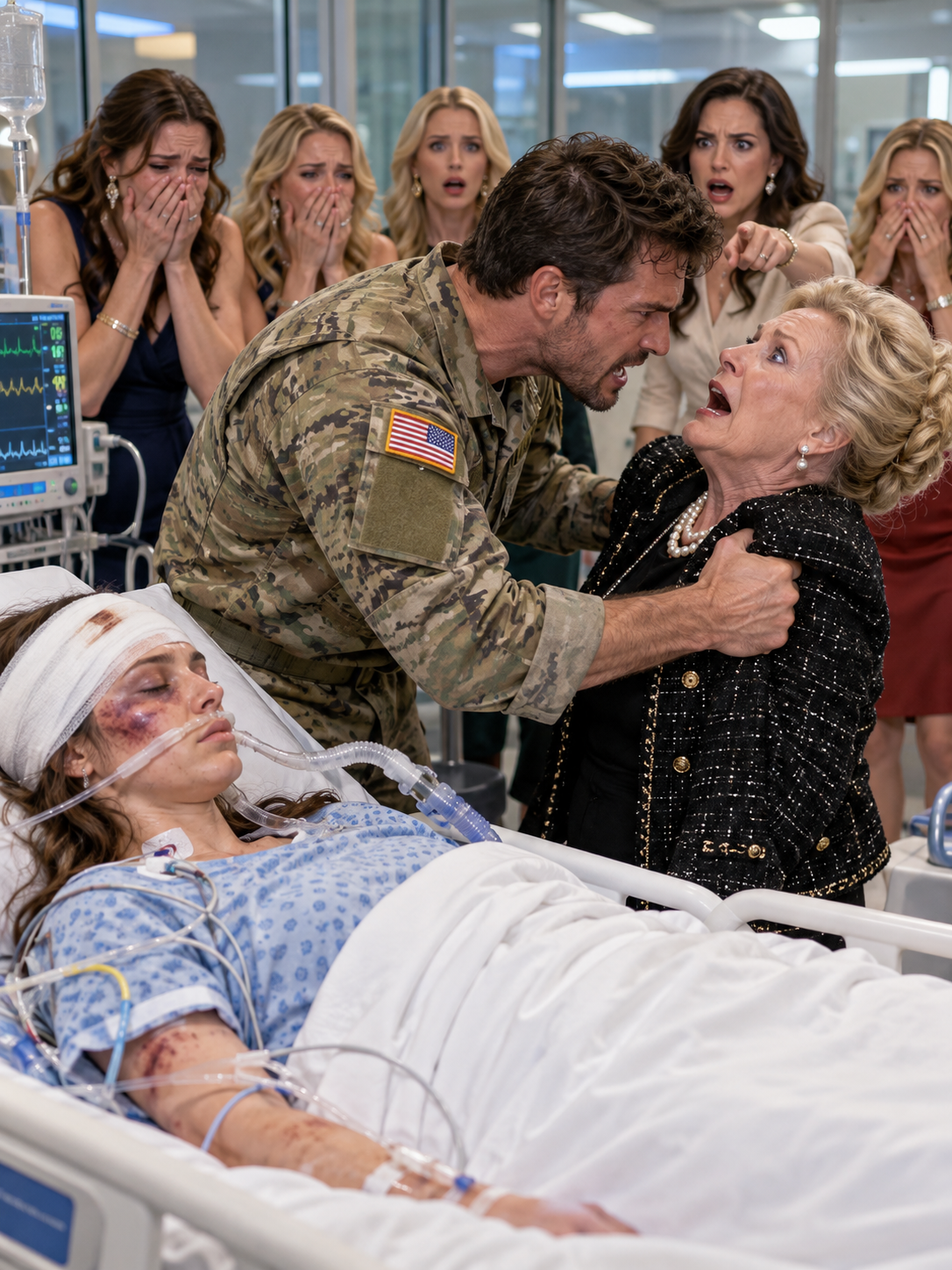
Dr. Harris closed my chart and said the words that should have ended my life: three days, maybe less, before my heart gave out completely. I did not cry. I was too busy watching the faces of the two people standing beside my bed, the two people I had spent twelve years believing would never let me face something like this alone.
My mother-in-law Margaret did not look grieving. She looked like a woman reading a winning lottery ticket. She leaned close, filling the room with her expensive perfume, and whispered so only I could hear.
"Perfect. Then this house will finally be mine."
My husband Daniel laughed. Not a nervous laugh. A relieved one.
"And in three days, I can marry Jennifer," he said, like he was confirming a dinner reservation.
I lay there with my fingers cold against the blanket, watching them through the glass wall of the hospital room, and I made myself a promise. If I had three days left, I was not going to spend them dying quietly for their convenience.
The Signature They Wanted
Margaret did not waste time on sentiment. The next morning she arrived with a folder of documents and a pen she had clearly bought for the occasion.
"You should sign the property transfer tomorrow," she said. "There is no point making things difficult. The house was always meant to stay in the family, and Daniel is the family. You are just the temporary arrangement."
Twelve years of dinners I cooked, holidays I hosted, and mortgage payments I split with a man who now stood at my deathbed rehearsing his second wedding. They assumed I was too weak to resist, too sedated to understand, and too close to the end to fight.
They had made that assumption for years. It had simply taken a terminal diagnosis for them to say it out loud.
What The Nurses Saw
Here is what they did not count on: hospitals have witnesses. The night nurse, a no-nonsense woman named Rosa, had heard Margaret arguing with a lawyer in the hallway about power of attorney forms. She had seen Daniel take calls from a woman he introduced, twice, as his business partner.
"Honey, I have watched families circle this bed like vultures for twenty years," Rosa told me quietly while she checked my IV. "I know the difference between grief and greed. Nobody in that hallway is grieving."
She also did something the three of them never bothered to do in all their years of family dinners. She asked me what I wanted.
"I want a second opinion," I said. "And I want a lawyer of my own."
The Second Opinion That Changed Everything
Through my sister, I reached a cardiologist at a larger hospital who agreed to review my file. He looked at my test results for a long time, then asked who had ordered the original battery of scans.
"Because either someone read these wrong," he said, "or someone wanted them read wrong."
I am not going to tell you I understood all of it. What I learned over the following week was that my condition, serious as it was, had been catastrophically overestimated. Where Dr. Harris had seen imminent failure, the new team saw a treatable case with real options. Not a death sentence. A detour.
Three days came and went. I was still breathing on day four, and on day five I signed nothing, because my own attorney had already filed an emergency freeze on the property while we investigated why my husband's family doctor and my cardiologist were the same golf partners.
The Recording They Forgot They Were Making
Daniel and Margaret, meanwhile, got sloppy. Grief-stricken people do; greedy people worse. They discussed the transfer in my hospital room with the door closed, forgetting that my phone had been recording since the first visit. I now had hours of audio: the wedding plans, the house, the insurance policy they assumed would pay out to Daniel, and Margaret's exact words about how long I had and how little I mattered.
My lawyer listened to ten minutes of it and stopped taking notes. "We are not negotiating anymore," he said. "We are choosing the courtroom."
What I Took Back
The divorce that followed was not a battle. It was an execution. Daniel's own recordings, his own texts, and his own lawyer's memo about the property transfer did the work for me. I kept the house, the majority of our shared assets, and full control of the accounts he had quietly been draining toward Jennifer for over a year. Margaret, it turned out, had never had any legal claim to anything at all. Her folder of documents was exactly as binding as her perfume was subtle.
Six months later, from a clinic two hundred miles away, my heart is stable and my future is mine again. My cardiologist says I may live for decades.
The Only Lesson That Matters
People ask me if I regret losing those years with Daniel. I regret the waste, not the escape. Here is what those three days taught me, the three days I was supposed to spend dying: when the people closest to you start measuring your life in what they will inherit, believe them the first time. And never, ever sign anything at a bedside.
They planned my funeral before my treatment. I planned their reckoning before my discharge. Only one of those plans survived the week.