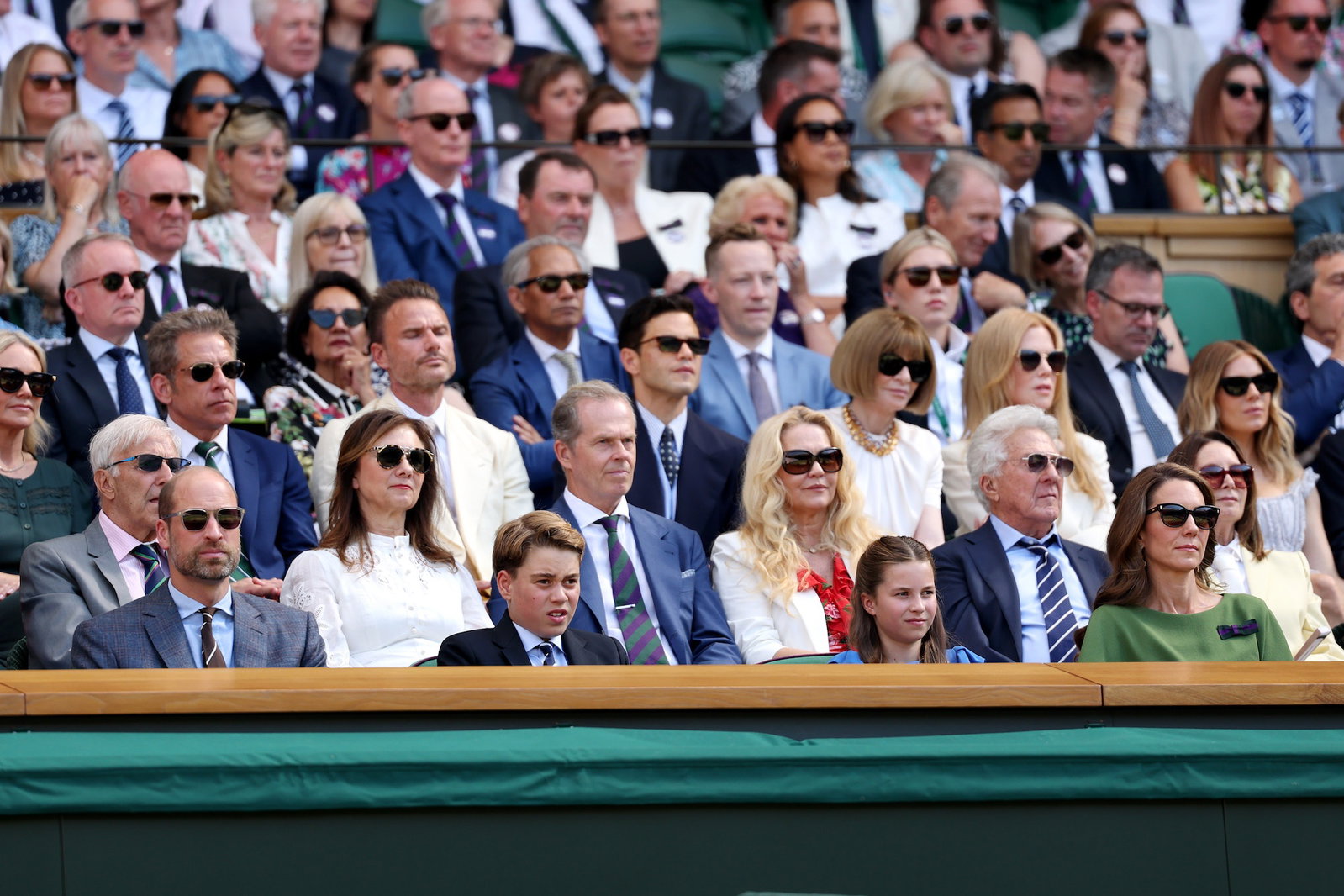
Royal watchers love to argue about what the monarchy will look like in fifty years. Genealogists, meanwhile, have quietly identified a revolution that already happened — in a maternity ward in London in July 2013. According to family historian Anthony Adolph, Prince George is the first future king in the line since William the Conqueror whose mother carries no aristocratic blood.

The Bloodline Facts
Every English monarch for nearly a millennium inherited their throne through a father steeped in nobility and, on the maternal side, almost always another aristocratic house. George breaks the pattern at its root. He inherits his royal lineage entirely from his father's side — but half of his ancestry flows from ordinary British families, spread across every layer of English society. Genealogists tracing the Middleton line have documented ancestors who were miners, laborers, drivers, clerks, carpenters, factory workers, domestic servants, and tradespeople.
The implications ripple further than trivia. Since the story circulated, family history researchers across Britain have discovered genuine connections to the future king's maternal line — ordinary people finding their own grandparents in the same parish registers that hold George's ancestors. No previous heir can offer that. For a thousand years, the monarchy's bloodline story was closed; now it's an open door with millions of relatives on the other side.
The Middle-Class Heir
George's mother, Catherine, was raised in what earlier centuries would have called a commoner's household without a second thought — a middle-class family in Berkshire, a mother who had worked as a flight attendant, grandparents who built a business from scratch. By contrast, William's own mother, Diana, came from one of England's oldest aristocratic dynasties, the Spencers. The social distance between the two women's origins is, historically speaking, enormous: Kate is the most ordinary-born woman ever positioned to be queen consort, and George is the product of that union.

A Childhood Built for Two Worlds
What makes the genealogy interesting is how deliberately his parents are cultivating both halves. On one hand, George's calendar increasingly reads like king-in-training: the VE Day eightieth-anniversary ceremonies last year, where he stood with veterans alongside his father; formal teas with senior royals; the incremental choreography of a future reign. On the other hand, fans spotted him at the Euro final in Germany that same summer, screaming from the stands like any twelve-year-old whose team was losing. The palace has never hidden either half of the schedule.
That balance is the strategy. William has spoken openly — most memorably during his Cape Town visit in late 2024 — about wanting a monarchy defined by empathy, accessibility, and impact rather than ritual density. A "streamlined" crown, in his phrasing. If that vision survives contact with reality, George is its intended face: an heir who watched his father modernize and whose own origin story makes the modernization believable.
Why the Ancestry Actually Matters
Skeptics will say bloodlines are symbolic furniture, and in constitutional terms they're right — George's qualifications are birth, nothing more or less. But symbolism is the monarchy's entire operating system. An institution under pressure to justify itself gains something real from a king whose great-great-grandparents include coal miners and cleaning ladies: proof that the crown's story and the country's story are no longer separate documents.

The Transition Era's Quiet Foundation
Commentators call this a transition era for the House of Windsor — a shrinking institution, a questioning public, a century of precedent under renegotiation. Into that uncertainty walks a twelve-year-old who represents, uniquely in royal history, both the ancient line and the modern nation it claims to serve. Whether he becomes the relatable traditionalist his father envisions or something no one has predicted, one fact is already settled: when George is crowned, the thousand-year streak ends. The king will be, on his mother's side, one of us.
The School Years as Testing Ground
George's education has quietly become part of the royal modernization project. His schoolmates' parents describe a household that treats the future king question with deliberate ordinariness: homework, sports fixtures, the normal social friction of a twelve-year-old whose face is on certain classmates' phones. The palace's approach — visible at state occasions, invisible at school gates — borrows from what worked for William and Harry's generation while correcting what didn't: no pressured solo appearances, no premature interviews, no childhood consumed by the job he hasn't applied for.
Royal educators note the long game: by the time George's reign arrives, decades of accumulated ordinariness will be its own credential. Kings raised entirely inside palaces have historically produced the most brittle public personas; kings with remembered ordinary years — school losses, football arguments, friendships formed before the crown mattered — arrive with an emotional biography the institution can't manufacture. His mixed ancestry gave him the story. His parents are giving him the experience. The combination is the prototype.