This is an original work of fiction. Characters, hospitals, and platforms are invented.
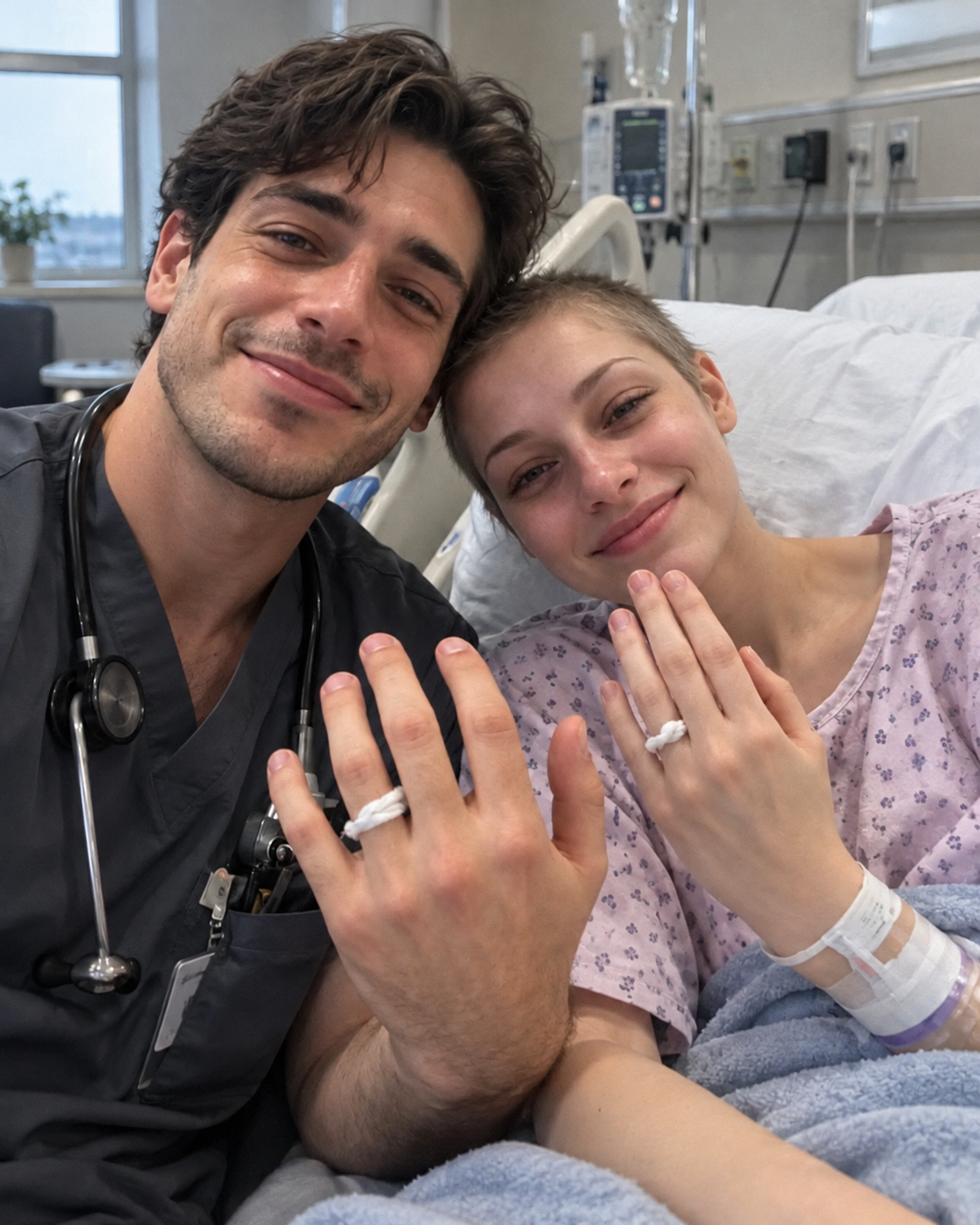
After emergency surgery, my fiancé twisted two strips of gauze into rings and slipped one onto my finger.
"Cheapest wedding ever," Adrian joked.
I laughed and let him take a bedside selfie.
By morning, he had announced that we were married.
Part 1
Adrian worked as a nurse practitioner at a clinic across town. He was not part of my hospital team, but he arrived after his shift still wearing scrubs and a stethoscope.
I had undergone an emergency appendectomy. I was sore, medicated, and relieved the surgery was simple.
Our actual wedding was scheduled four months later at a small restaurant. We had paid a $3,000 deposit and invited sixty people.
Before surgery, Adrian and I had argued about costs. He wanted a larger event and had added upgrades without telling me. I insisted we stay within the $12,000 budget we could pay from savings.
The gauze-ring joke seemed like a release from that tension.
At six the next morning, my phone contained 147 messages.
Adrian had posted the selfie with the caption: SHE COULD NOT WAIT, SO WE SAID YES RIGHT HERE. A fundraising link below it asked friends to help cover "unexpected medical wedding expenses" and a future celebration.
The page said a hospital chaplain witnessed our vows.
No chaplain had visited. We had signed no license. I had said no vows.
The campaign had collected $6,240 overnight.
I called Adrian from the hospital bed. He said everyone understood it was a symbolic marriage and the legal paperwork could happen later.
"The page says we are married," I said.
"Emotionally, we are."
Then he mentioned the restaurant had demanded the next payment. He used the story to raise money because my surgery made people generous and the gauze rings made the post unforgettable.
The first clue had been his insistence on retaking the selfie until both rings were visible.
The second was his request that I smile "like we just did something crazy."
I had consented to a photograph. I had not consented to becoming a bride, a patient story, or a fundraiser.
Part 2
I asked the nurse to note that no photographs or visitor statements could be released without my approval. Then I reported the campaign as materially inaccurate and saved screenshots of the page, donations, and comments.
My sister, Priya, brought my laptop and helped me write one public correction.
I stated that I was recovering well, no wedding had occurred, and the fundraiser was created without my approval. I asked donors to use the platform’s refund option.
I did not describe Adrian as a scammer or claim he caused my surgery. The facts were enough.
The platform froze the balance. Most donors requested refunds. A few asked us to keep their gifts for the real wedding. I declined because there would be no wedding until I understood why my fiancé believed my hospital gown was a marketing opportunity.
Adrian arrived carrying flowers and a printed marriage-license application. Security allowed him in after I agreed to a short visit.
He said we could make the announcement true by signing that week.
"You want me to marry you so your post stops being false?"
He called it saving us embarrassment.
I returned the gauze ring.
After discharge, I stayed with Priya while Adrian and I separated finances. Our wedding account contained only $1,900. I expected nearly $8,000.
Adrian had paid for a premium band, imported flowers, and a videographer without my approval. The fundraiser was intended to replace money he had already committed.
The hospital image was not an impulsive romantic post. It was an emergency solution to a budget he hid.
Part 3
I canceled the restaurant and vendors whose contracts included my name. We lost deposits totaling $4,100. Adrian was responsible for the band and upgrades he contracted separately.
I saved the final refund report with the canceled contracts so every dollar could be traced later.
The fundraising platform refunded the remaining contributions after its review. Adrian repaid two relatives who had sent money directly.
His employer also reviewed the post because his scrubs and badge were visible. The clinic found no patient information from his workplace, but it required him to remove branding and complete social-media training.
I contacted every person who had sent money directly. Some were embarrassed that they believed the announcement. I told them Adrian had designed it to be believable and that the responsibility was not theirs. Four accepted immediate repayment; two asked that their gifts go to a local patient-assistance fund instead. I donated the equivalent amount only after the refunds were complete, so charity did not become another way to keep money collected under a false story.
The restaurant applied part of our deposit to a private dinner credit under its cancellation policy. I transferred my half to Priya for helping during recovery. Adrian kept responsibility for vendor balances tied to upgrades he alone had signed.
I ended the engagement.
Adrian asked for counseling and said wedding pressure changed him. I believed pressure revealed a habit already present: when reality threatened the image he wanted, he edited reality and expected me to step into the revised version.
Recovering from surgery took two weeks. Recovering my money took four months. Recovering trust in my own judgment took longer.
I had noticed Adrian upgrading plans, retaking photographs, and treating private moments as announcements. I dismissed those choices as enthusiasm because the larger story—engagement, wedding, happy future—felt good.
Six months later, I attended my cousin’s courthouse wedding. Twelve people stood outside afterward eating cupcakes from a grocery store. Nobody apologized for the size.
The gauze-ring selfie still exists on my phone. I cropped Adrian out before moving it into a private recovery album. In the photograph, I look exhausted and alive.
That is the true event the picture records.
A wedding cannot be created by a caption, and consent to a photograph is not consent to the life someone sells beneath it.