"Get out, and take your boy with you. There's no room in this house for people like you."
My son's father-in-law said it with one hand flat against Tyler's back, steering him toward the door, then shoved the suitcases into the hallway where my six-year-old grandson could watch the clothes spill across the marble. "You're beneath us. You're nothing but poor people." Gordon Whitfield was wrong about the money, and money is the one thing men like him never think to check.
I wiped my hands on a rag, made a single phone call, and smiled. Hours later he would learn who had bought the $42 million of debt hanging over his company, but the phone call is not the part worth telling. The part worth telling is the twenty-two years of work that made the call possible while Gordon was busy deciding what kind of people we were.
Two Suitcases and a Toy Tractor
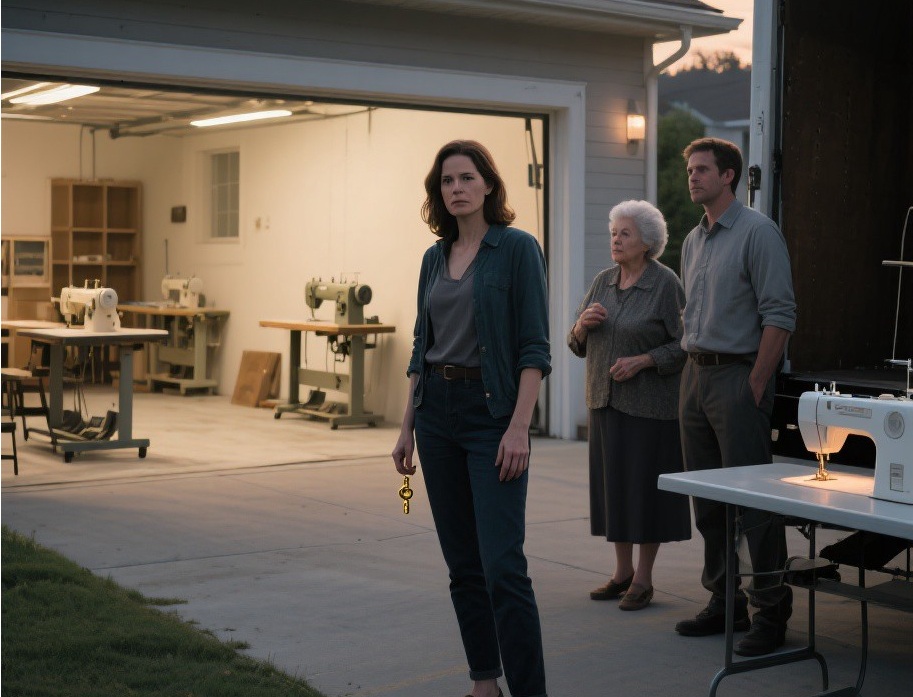
Tyler pulled into my shop on the outskirts of Ames with his shirt wrinkled, his eyes swollen, and a suitcase in each hand. Beside him, Mason clutched a yellow toy tractor as if it were the last thing he still owned. I set my wrench on the bench and wiped my hands. I did not ask a single question first. I hugged my grandson.
"Grandpa, are we poor now?"
The question went through my chest like a nail, so I knelt down to his level and gave him the only answer I have ever believed.
"No, buddy. Poor is when you've got nobody to call when everything falls apart. You've got your dad, you've got me, and you've still got that tractor. We're better equipped than half the country."
Mason smiled, barely. Tyler did not, and his face told me the rest before he said a word. Four years he had run logistics at Whitfield Agri, his father-in-law's company. He had built the routes, cut the losses, negotiated with truckers, and spent whole nights untangling deliveries that other men had abandoned. That morning, Gordon had decided Tyler's salary was an insult to the family name, and his marriage along with it, because my son had the audacity of modest means and a father who owned a repair shop instead of a boardroom.
What a Repair Shop Hears
Twenty-two years of fixing machines for every farmer within fifty miles buys more than money, and Gordon never understood that. It buys information. Everyone talks in my shop. Farmers talk about harvests, banks, and debts the way other people talk about weather, and a man holding a broken gearbox tends to say more than he meant to.
Three weeks earlier, a client had mentioned over coffee that Whitfield Agri was quietly drowning. Its notes had been sold to a distressed-debt fund after two failed harvests, and the fund was shopping the paper to anyone willing to take the risk. $42 million. I did nothing with that information, because family was family and I had no interest in being right about my son's marriage.
The Purchase, and What It Cost
That afternoon, standing in my coveralls with the memory of Mason's trembling chin still fresh, I called my attorney, and then a broker in Des Moines. The purchase closed before dinner. My shop is profitable; my land, bought cheap in the eighties, is not. Pledging it felt like betting the whole farm on a principle, which is precisely what it was, and I want to be honest about the arithmetic of that: if the debt had gone bad, I would have lost the bench I have worked at since I was a young man.
By evening, through a holding company with a name that meant nothing to anyone, I owned every dollar of Whitfield Agri's debt. The phone in Gordon's glass office started ringing the next morning. It was not a bank on the line. It was his new creditor.
The Terms
I did not call to gloat, because gloating is what a small man does when he finally gets a big stick. My lawyer called with terms instead: restructure the debt at favorable rates, on two conditions. First, my son would be rehired as head of logistics, with a contract and back pay. Second, every vendor and trucker Gordon had squeezed would be paid current within thirty days.
If he refused, I could call the paper due and watch the auction. He took the deal, as men like him always do when the math turns personal.
The Man in My Doorway
Gordon drove to my shop himself, in a suit that no longer looked like armor. He stood in the doorway surrounded by grease and toolboxes, and for the first time in four years he spoke to me like a man instead of a pedigree.
"You. It was you? A mechanic?"
"That's the funny thing about poor people," I told him. "You stop seeing us. You stop checking what we own, what we know, and who owes us favors. Then one day we buy your debt with money you sneered at, and you can't figure out how it happened."
He apologized, in his way, which sounded mostly like relief that his company would survive the quarter. I let him keep his dignity, because the goal was never to destroy him. It was to return something he had taken from my family: standing, the plain expectation of being treated as though we belonged in the room.
What My Grandson Learned
Tyler is back at his desk, running logistics better than anyone in the county, and his marriage is being rebuilt on his terms, with counseling and boundaries spelled out in ink rather than assumed. Mason visits the shop every Saturday, tools scattered around the yellow tractor, learning to fix things instead of judging them.
"Grandpa, are we still poor?" he asked me last week, grinning, because six-year-olds never forget a good punchline.
"No, buddy," I said. "We're rich in the only thing that counted that day. Somebody to call."
Gordon still lives in his mansion and I still live above my shop, and I would not trade addresses with him for anything he owns. Money decides what you can buy. Character decides who answers when the mail turns bad.
Anyone can write a check once he is angry enough. The discipline is in the twenty-two years before it, in the customers you treat fairly when nobody is watching, in the land you buy and hold, in the phone numbers you keep current. Out here we keep the ledgers, we know the numbers, and occasionally, quietly, we buy the debt.