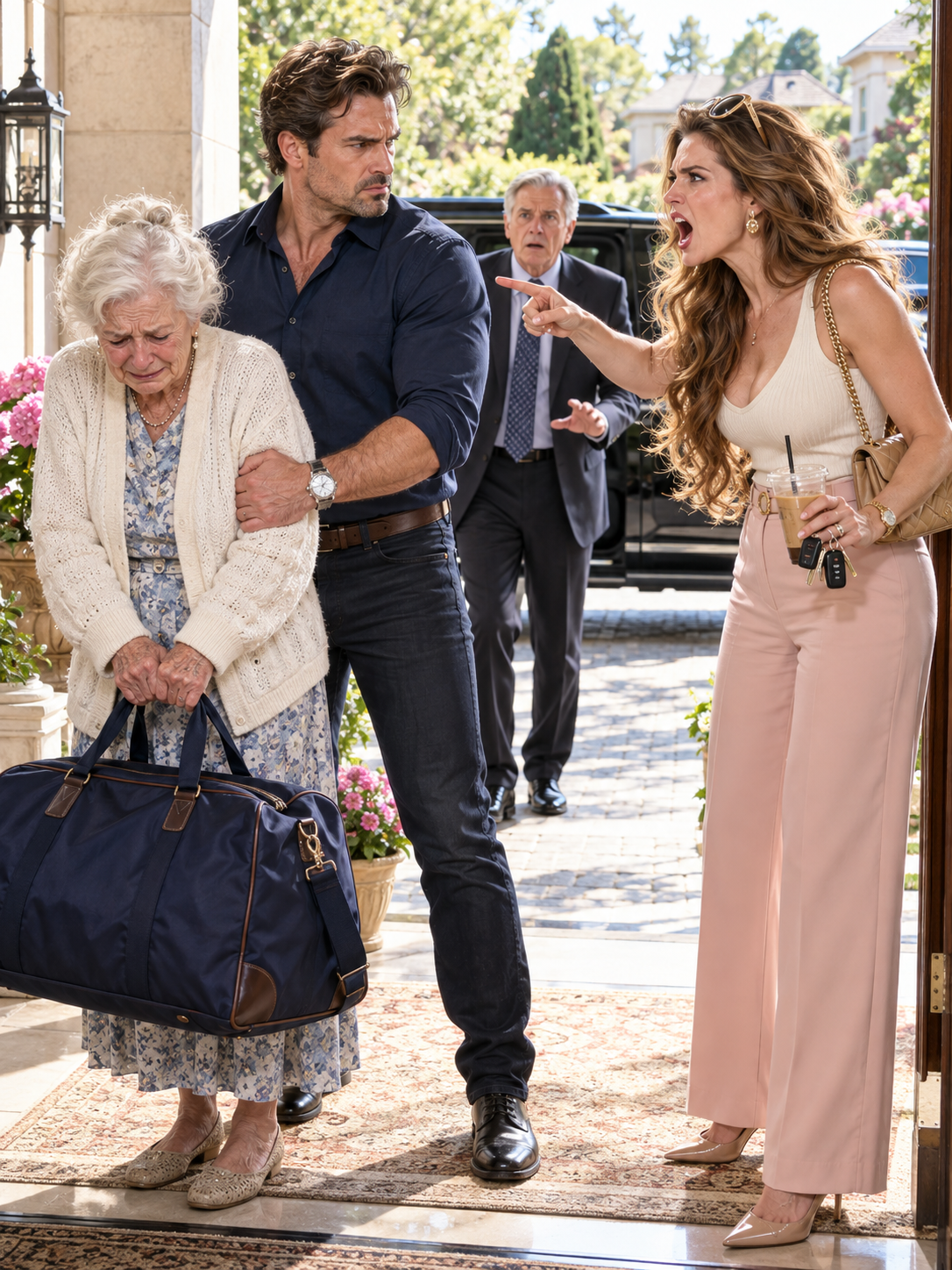
The fight in my hallway that morning was never about a car. It was about whether my mother counted as a person in my own house, and my wife had answered that question years before I was willing to listen. What finally made me listen was not her refusal but my mother's apology for causing it.
My mother was eighty-two and standing in the hallway with her hospital bag in her hand when Gwen looked straight at her and said, "Not my problem." The specialist appointment was forty minutes away. My car was in the repair shop. The SUV in the driveway was the only vehicle we had, and I had spent years explaining away moments like this one, telling myself Gwen was tired, not a morning person. Then I watched my mother lower her eyes in her son's house, and the explaining stopped.
"Gwen, she needs to see her specialist," I said, working to keep my voice level. "We have been waiting three months for this appointment. I only need the car for a couple of hours."
She barely looked up from her phone. She was dressed for brunch in expensive yoga clothes, an iced coffee in her hand, the SUV keys resting beside her designer purse. "Then find another way. I have plans with my friends, and I am not rearranging my entire day because your mother cannot manage her own appointments." The keys were already out. She had not needed to decide anything; she had set them down where I could see them and gone back to her screen.
My mother had been awake since five that morning, choosing her favorite blue cardigan and combing her hair just so for the doctor. The night before, she had baked Gwen's favorite banana bread and wrapped two slices separately, because she remembered that Gwen sometimes skipped breakfast before meeting her friends. That is who my mother is. That is who Gwen could not be bothered to see.
The Apology That Hurt More Than the Refusal
"It is all right, Brandon," Mom whispered, touching my arm. "We can reschedule. I do not want to cause trouble between you two."
Those words landed harder than anything Gwen said. My mother has spent her whole life making herself smaller so other people could be comfortable, and here she was in my hallway, apologizing for needing a ride to a medical appointment. I turned back to my wife. "You know how important this visit is. The doctor needs to review her latest test results."
Gwen sighed and picked up her purse. "And you know how tired I am of everything revolving around your mother. She is eighty-two, Brandon. You cannot expect the entire world to stop whenever she needs something." Listen to the arithmetic in that sentence. A brunch with friends was fixed and immovable. A specialist's review of test results was an inconvenience that could be postponed indefinitely. She weighed the two, found my mother wanting, and said so as if it were simple household management.
I called a rideshare. I rode in a stranger's back seat with my mother's hand in mine, and I held it again in the waiting room while she pretended to read a magazine. The doctor reviewed her tests, adjusted her medication, and told us something I have not stopped thinking about: catching this now, on schedule, likely prevented a stroke. Three more months of waiting might have been too late.
What I Found While She Was at Brunch
While Gwen toasted with her friends, I came home and did what I should have done years earlier. I sat down with our finances. It took twenty minutes to find the designer purse, the brunches, the studio apartment her sister rented, and half our discretionary spending flowing through accounts I had never monitored. More than forty thousand dollars over three years. I had handed her full control of the money and called that trust, because the other word would have required a conversation I did not want to have.
That evening she came in with shopping bags. I had the bank statements spread across the kitchen table next to the untouched banana bread. "We need to talk about where our money has been going," I said. Her face moved through three expressions in five seconds: surprise, calculation, then indignation. "You are monitoring me now? Because your mommy had a doctor's appointment?" The contempt in her voice made the decision for me.
The Conversation That Ended the Marriage
"Your mother baked you bread last night," I said. "She wrapped it in a bow. You would not even lend a car to save her from a stroke. I did not marry that person. I do not know if I ever did."
We filed for divorce two months later. Her attorney fought over everything until the financial records came out, and then the negotiation got very short. I kept the house I had mostly paid for, and I used part of the settlement on one purchase that felt better than any revenge: a reliable new car, parked in the driveway, with my mother's name on the insurance as a secondary driver. She would never have to ask anyone's permission again.
What I Learned Too Late and Just in Time
People ask why I did not see it sooner. The honest answer is that quiet cruelty is easy to rationalize when you are tired and want a peaceful house. Each dismissal looked survivable on its own. Only when I stacked them together did the pattern appear, and the pattern was not about a car or a brunch. It was about a woman who had sorted the people in her life into those worth the effort and those who could wait.
Mom is doing well. Her checkups are on time, her cardigan collection has grown, and she bakes banana bread that I actually eat. My sister helped me find a support group for adult children navigating elder care, and I wish I had joined years ago. I had mistaken endurance for loyalty for most of my marriage.
Here is what I would tell anyone standing in my old hallway. Watch how the person you love treats people who can do nothing for them, because that is the version of them that will eventually be aimed at you. Then check the accounts. Not because money is the point, but because contempt always leaves a trail, and the trail is usually a receipt.