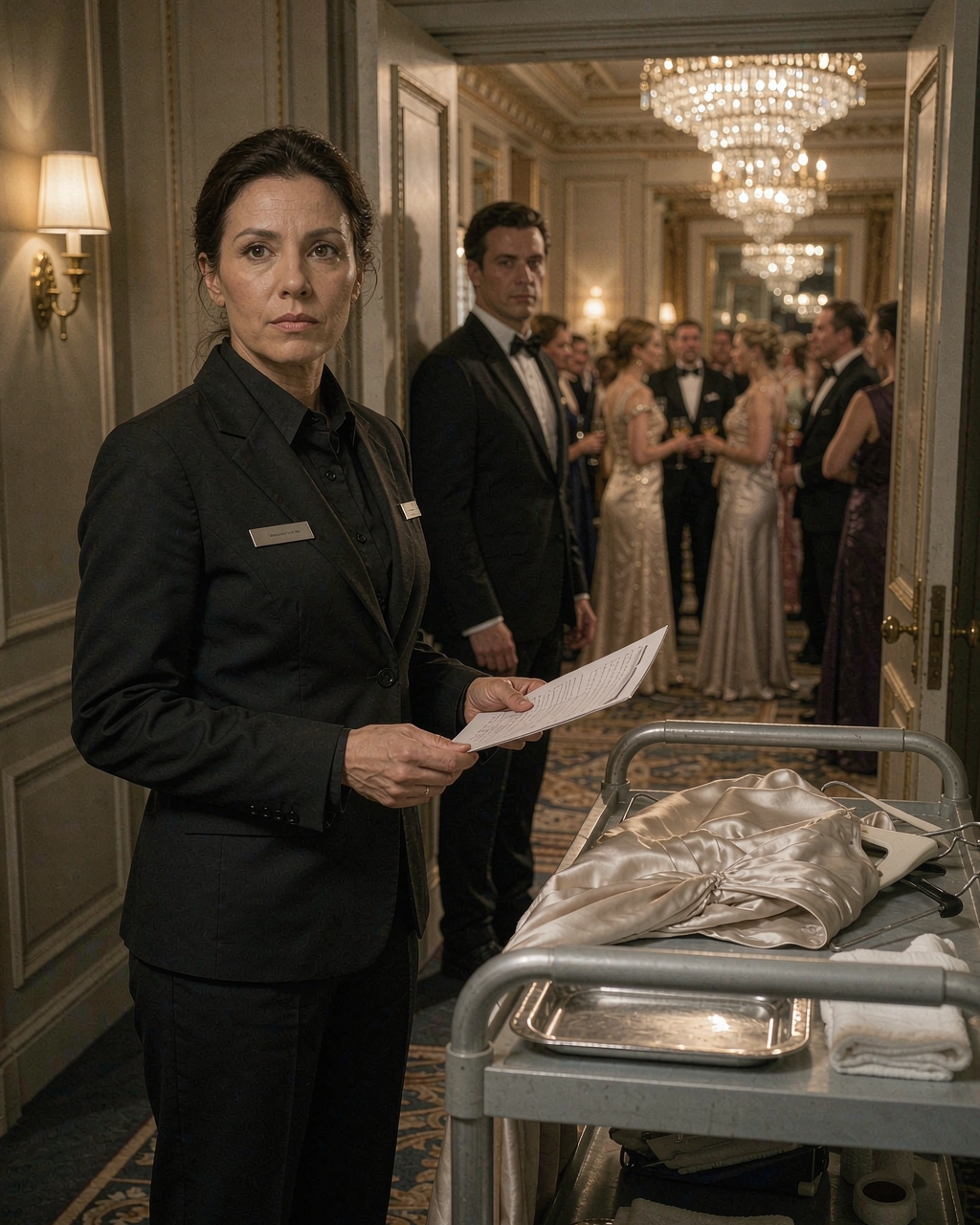
This is an original work of fiction. Names, characters, businesses, and events are invented.
During my engagement party, I found my sixteen-year-old niece hiding behind the powder-room door with her phone recording. In the hallway, my fiancé was pressuring my chief financial officer to approve a $240,000 payment I had never authorized.
Part 1
I founded Alder & Row after leaving an architecture firm that paid women in praise and men in equity. Fourteen years later, we designed hotels, restaurants, and public spaces across three states. I still owned a controlling share, but I had built financial controls specifically so enthusiasm, including mine, could not move large amounts without review.
Adrian entered my life through a client dinner. He advised hospitality companies on branding and knew how to make every person at a table feel selected. After two years together, he proposed. He had no role at Alder & Row, though he occasionally introduced prospective clients. I kept that boundary clear in writing and conversation.
The engagement party took place at my home. Investors, employees, relatives, and clients filled the rooms. My sister brought her sixteen-year-old daughter, Maya, who preferred sketching floor plans to making small talk. I told her she could hide in the library whenever the crowd became too much.
Lena Cho, our CFO, arrived late and tense. A month earlier she had experienced a panic attack during a board presentation. She had taken three days off, returned with medical support, and continued doing excellent work. Adrian repeatedly described her as fragile afterward, a word I corrected each time.
He had also recommended a consulting firm called North Harbor Strategy. I authorized a review of its proposal, not a contract. The quoted fee was $240,000, unusually high for the work. Lena flagged unclear deliverables and a demand for fifty percent upfront. I told her not to release funds.
Part 2
Near midnight, I noticed Maya slip through the service hallway. When she did not return, I checked the powder room and found her crouched behind the open door. She whispered that Lena had been crying and asked me not to delete the recording on her phone.
Through the wall, Adrian told Lena to approve North Harbor’s payment before morning. He claimed that once we married, he would direct the company’s growth strategy. Lena reminded him he held no office. He answered by threatening to tell the board that her anxiety made her unreliable.
Then he revealed the conflict he had hidden. North Harbor belonged to his college roommate, and Adrian expected a referral payment after the transfer. He said everyone would benefit once I stopped treating company and household money as separate worlds. Maya’s recording captured every word.
I copied the file to my email and texted Lena to step into the library. There she showed me three messages from Adrian, including wiring instructions and a draft announcement naming him strategic vice chair. He had used a copied version of my signature from an old event letter. Our controls had stopped the payment because Lena refused the second approval.
I called our outside accountant and board chair. They advised freezing the vendor record and preserving messages. Then I asked security to remain near the front entrance. I did not announce a crime or stage a dramatic arrest. I needed evidence protected and Adrian removed from systems and property he had no right to access.
Part 3
Adrian was preparing the engagement toast when I entered the ballroom. I took the microphone and told guests there would be no announcement because a private business matter required the event to end. I thanked staff, arranged rides for anyone who needed one, and asked Adrian to stay in the foyer with security present.
He called me paranoid and said Lena had manipulated a child. I played thirty seconds of the recording: his voice, the amount, and the referral payment. His confidence collapsed into bargaining. He said he only wanted a meaningful role after marriage and believed I was too cautious to recognize opportunity.
I ended the engagement that night. Because Adrian did not legally reside with me, security escorted him out with the coat and bag he had brought. I changed access codes, notified my bank, and preserved the documents for counsel. The board engaged an independent investigator rather than relying on my personal conclusion.
The investigation confirmed the undisclosed relationship and attempted payment. No company funds had left. North Harbor withdrew its proposal, and our counsel handled the forged signature and related reporting. We added a rule barring household members of executives from vendor discussions unless conflicts were formally disclosed.
I also met privately with every manager who had received instructions from Adrian. Two admitted they had complied with small requests because they assumed my engagement gave him informal authority. We documented where the confusion began, reversed his access, and trained staff to verify authority by role rather than relationship.
Lena remained CFO. At the next board meeting, she presented the timeline herself. Nobody called her fragile. The control she defended had worked exactly as designed, while the man who mocked her anxiety had depended on shame and urgency to bypass it.
Maya’s recording was preserved, but the investigation did not rest on a teenager’s word. Emails, vendor records, draft announcements, and access logs independently confirmed the attempt. That distinction helped her understand that speaking up had started the review; she was not responsible for proving the entire case.
Maya worried she had ruined my engagement. I told her Adrian had done that; she had only refused to ignore a person in distress. I also told her she never had to become a secret investigator again. The safest next step is to find a trusted adult, not carry evidence alone.
I used to believe privacy meant resolving ugliness without letting it disturb the room. Adrian exploited that instinct. Now I understand privacy is not silence, and composure is not compliance. My engagement party ended without its printed toast, but the company survived because one employee said no, one teenager paid attention, and I chose the truth before the guests finished their champagne.