"Mom... Dad is waiting for you to die. Please don't open your eyes."
That was the first thing I heard after twelve days lost in a thick, suffocating darkness, like being buried alive without a coffin. I could not move. I could not speak. I could not even take a deep breath without pain splitting my skull in two. But I knew that voice instantly, the way you know rain by its smell.
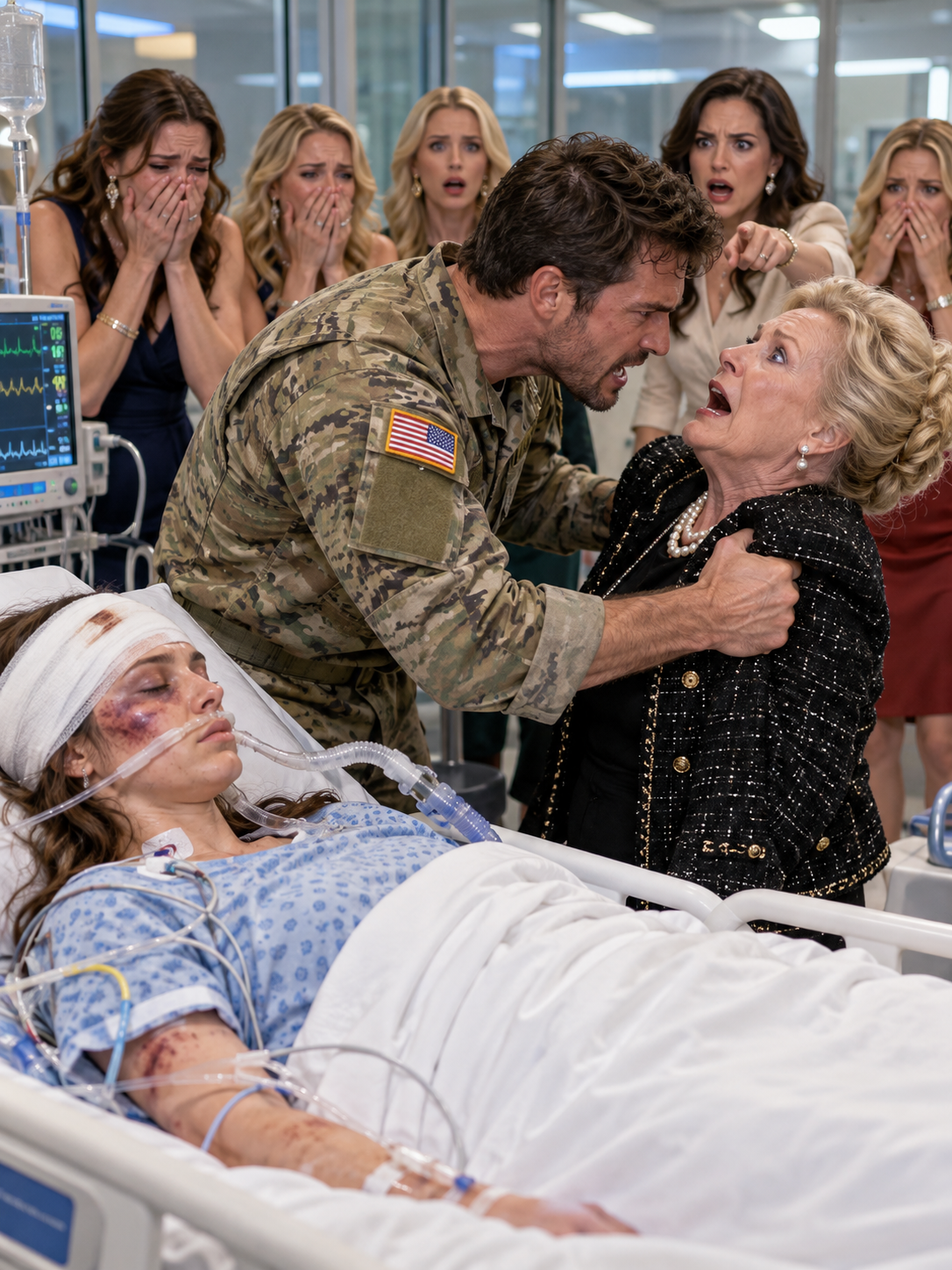
"Gwendolyn..." I said inside my own head, to no one. My nine-year-old daughter was beside my hospital bed, crying softly, her small hand wrapped around mine the way she used to when fireworks scared her. "Mom... if you can hear me, squeeze my hand. Please."
I tried. God knows I tried. But my body would not listen. A nurse walked in talking about IV fluids, blood pressure, and the miracle that I was still alive. She mentioned my SUV had gone off the road near a mountain pass outside the city. And slowly, in fragments, I began assembling the truth from the things people said over my broken body.
Twelve Days of Listening
You learn terrible things when people think you are asleep. The accident was not an accident. A tow truck driver at the scene remembered a pickup truck that had been following me for miles. The police report listed a question mark where the other vehicle should have been. And my husband, Daniel, had told the officers something that did not match the evidence: that I had left home upset, alone, driving somewhere he could not explain.
Except I had not left upset. I had left for the pharmacy with a list in my hand and a plan for dinner. Gwendolyn knew it too. She was the one who had told the police about the pickup truck, because she had seen it idling at the end of our street three times that week. She was nine years old and she had done what no adult in the house would do: she paid attention.
What My Sister Was Doing There
Then there was my sister, Carmela, who appeared at the hospital within hours of the crash and never seemed to leave. She brought paperwork to Daniel. Insurance paperwork. My life insurance, which Daniel had quietly increased eighteen months earlier, a change I had discovered by accident and never mentioned. I heard her whisper in the hallway, "Once it clears probate, the house goes to you both. She never updated her will after the refinance."
My own sister. Standing over my unconscious body like a vulture that had learned to wear perfume.
On day nine, Gwendolyn came back and told me the rest, in the small, careful voice of a child carrying adult horror. She had found emails on Daniel's laptop while looking for her school login. Messages between Daniel and my sister that went back more than a year. Messages about money. About waiting. About "when things resolve themselves." She had not understood all of it. She had understood enough.
The Squeeze
On day eleven, I felt my left hand close. Barely. The night nurse saw it and dropped her clipboard. By morning I could open my eyes, and the first face I saw was Gwendolyn's, tear-streaked and terrified and absolutely heroic. The second was Daniel's, and I watched something die behind his smile when he realized I had been awake in every way that mattered for eleven days.
"Welcome back, sweetheart," he said. I looked at him for a long moment and said, clearly enough for the whole room, "Get the police on the phone. And Daniel - don't leave the building."
The Collapse of Their Plan
They had not been clever, only patient. The investigators matched the pickup truck to a cousin of Carmela's who owed her money. The insurance increase, the outdated will, the emails - it assembled into a picture that prosecutors found easy to draw. Daniel was arrested at the hospital coffee machine. Carmela was arrested two days later at her nail appointment. My cousin's tow-truck driver turned out to have a dashcam. The mountain pass has cameras everywhere now.
At the preliminary hearing, Gwendolyn sat in the back row between two victim advocates, holding my hand the way she had held it at the bedside, and I understood something that no therapist had managed to teach me in the weeks after. My daughter had saved my life twice - once by calling 911, and once by choosing, at nine years old, to trust that her whispered warning would reach me.
What Comes After
Recovery is slower than revenge, and less cinematic. I relearned how to walk down stairs. I changed the locks, the will, and the insurance. I sold the house, because the hallway where Daniel stood while planning my death is not a place I need to see each morning. Gwendolyn and I moved into a small rental near her school with yellow curtains she picked out herself, and a dog she named Justice, because she is nine and allowed to be on the nose.
People ask whether I hate my sister. The honest answer is that hate takes energy I ration carefully now. What I feel is a cold, permanent clarity: the people who wait for you to die rarely expect you to hear them. I heard everything. And when I finally opened my eyes, I was not the woman they had planned around. I was the witness they had forgotten to account for.
My daughter still holds my hand sometimes, out of habit, when the fireworks go off in July. I squeeze back now. Every time. Because I can.