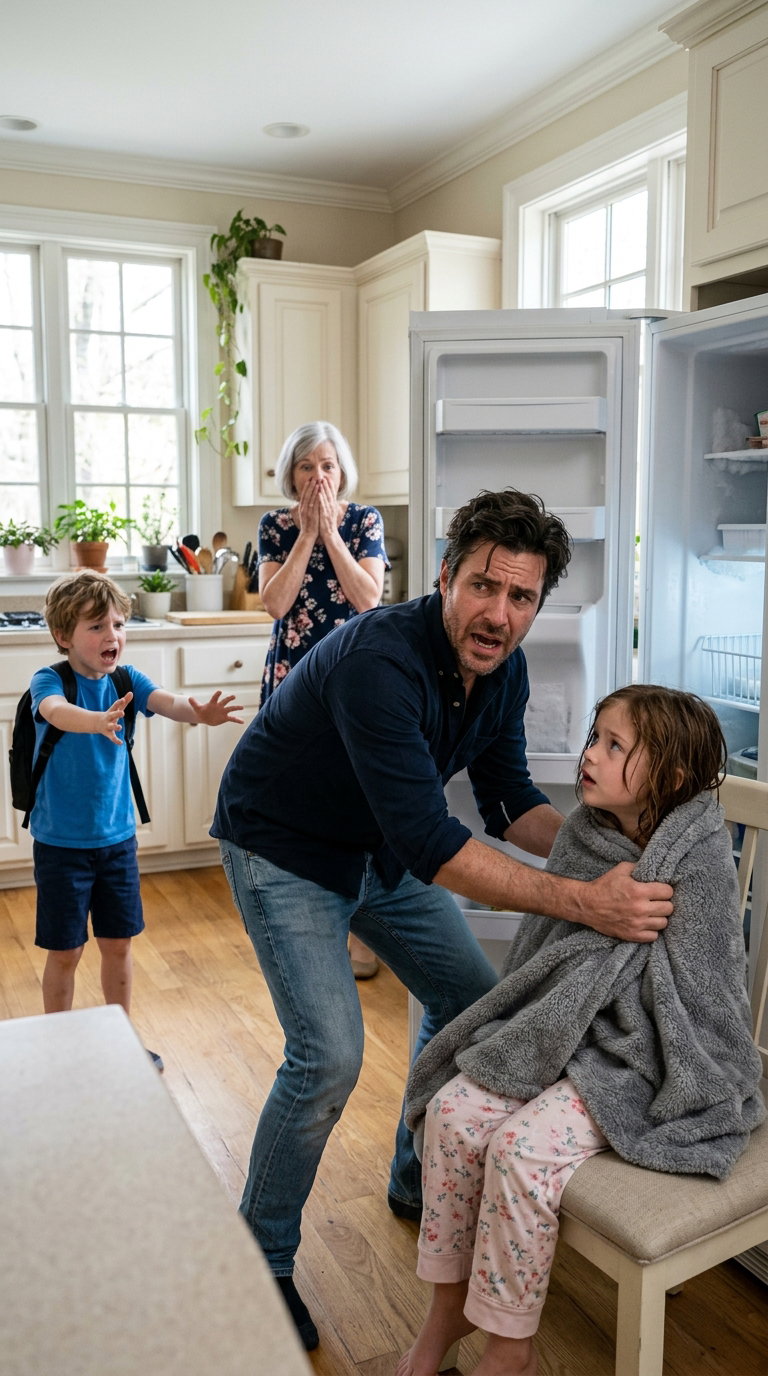
"Dad, Grandma locked Lucy in the freezer and put a padlock on it! Please come before she dies!"
My son Max was seven years old when he shouted those words into a phone that went straight to voicemail, so he got on his bike and rode nearly seven miles through the Phoenix heat to find me instead. I will never forget how he collapsed in front of me. What I learned that day is that a child's warning is only ever as good as the adult who decides to believe it.
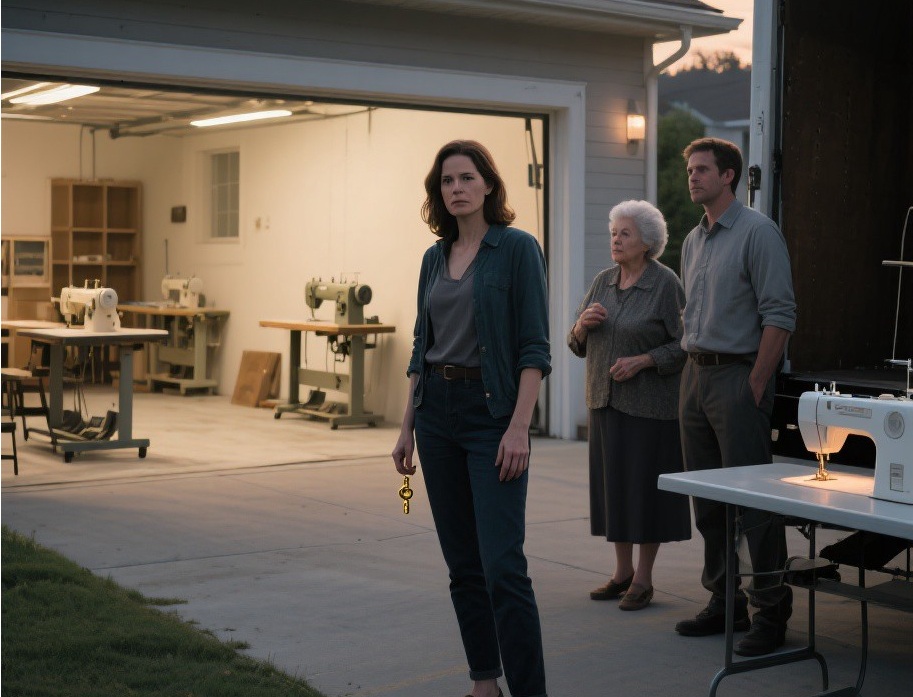
My name is Jake Morrison. I am thirty-eight, and I install industrial flooring for a living. That Thursday in June, Arizona was baking under temperatures well over a hundred degrees, and since six that morning my crew and I had been pouring concrete at a new pharmacy site, the cement setting faster than we could smooth it.
Then my coworker Rick pointed toward the road. "Jake, isn't that your kid?"
I looked up and my stomach dropped. Max was walking along the shoulder, dragging his little red bike behind him. His lips were cracked, his T-shirt was soaked through, and one knee was scraped raw. He could barely stand, yet he had pedaled the whole way because his phone call went straight to voicemail and there was no one else to find.
I ran to him. "What happened, champ? Where's your mom?"
My son tried to answer, but the tears would not let him. Finally he choked it out: his mother, my wife Dana, had been rushed to the hospital that morning with appendicitis. Grandma Rosa was supposed to watch Lucy. And then Max had seen something no seven-year-old should ever see.
The Drive That Felt Like Forever
I strapped Max into the truck, called 911 on speaker, and drove home faster than I ever have in my life. The dispatcher kept me calm while sirens, somehow, moved in the same direction I did. Max kept repeating one sentence over and over. "I pushed the freezer, Dad. It wouldn't move. There's a lock on the handles."
When we pulled into the driveway, my mother-in-law's car was gone. Rosa had gone out to lunch, it turned out later, like nothing had happened. I grabbed a crowbar from the garage and sprinted inside.
The kitchen freezer door was shut, and a brass padlock hung through two freshly drilled holes in the handles. My hands shook so badly it took three tries to wedge the crowbar in and snap the hasp loose.
What I Found Inside
The moment the door swung open, Lucy blinked up at me from the frost-covered shelves. My fourteen-month-old daughter, curled in a pile of frozen peas and chicken, alive. Her lips had gone pale, but she reached for me and cried, and I have never been so grateful to hear crying in my life.
The paramedics arrived minutes later and found her temperature dangerously low but her heart strong. They told me that another hour, maybe less, in that heat-stealing box, and it would have been a different story entirely.
Max had saved her. He remembered where the spare key to the garage was, dragged his bike out, and rode seven miles through a furnace to find his father. A seven-year-old boy. My hero.
Then the Police Opened Her Phone
Officers reached Rosa at a restaurant across town, calm as Sunday morning. She claimed the padlock was to keep Lucy out of the freezer, that it was all a silly misunderstanding. But when Detective Alvarez asked her to unlock her phone for the timeline, she refused, and that refusal changed everything. With Max's account and the padlock, they had grounds, and what they found on that phone made my blood run cold.
Rosa had spent two weeks researching custody law. There were messages to her sister in Ohio complaining that Dana "married beneath her" and that the children would be better off raised by family, her family. There was a note in her drafts about hiring a lawyer the following week. Most chilling of all was a search from the day before: how long can a toddler survive in a cold environment. I read that line twice and felt the floor tilt beneath me.
The Verdict Nobody Wanted
Her defense attorneys eventually argued that Rosa, sixty-six, had been spiraling into dementia, that her judgment was collapsing faster than anyone noticed. The court ordered a full psychiatric evaluation, and the doctors agreed there was real cognitive decline, though not enough to erase what she had done.
She pleaded no contest to child endangerment and received a suspended sentence, mandatory treatment, and a permanent no-contact order. Dana and I did not argue for mercy, and we did not argue for maximum punishment either. We argued for Lucy, and Lucy needed her parents, not a decade of depositions.
What That Summer Left Behind
Dana recovered fully. Lucy has no lasting effects, except that she still refuses to go anywhere near the kitchen freezer, and honestly, that is fine with me. Max got a new bike, a bigger one, and a framed photo of that little red wreck that we keep on the mantel.
Some nights I still wake up replaying that call, the one that almost went to voicemail. That is the part that stays with me, not the freezer or the padlock. My son did everything right, and the entire rescue still depended on one adult deciding to pick up.
People ask what I learned. Here it is: listen to your children like their words are the most important thing in the world, because one day they might be. Never assume that family means safe. And when a seven-year-old rides through hell to tell you something, drop everything and believe him.
I keep the photo where I can see it from the kitchen table, small and red and ruined in its frame. It is a reminder that the most important call of my life did not arrive on a phone at all. It arrived on a bicycle, and the only correct response was to stop pouring concrete and go.