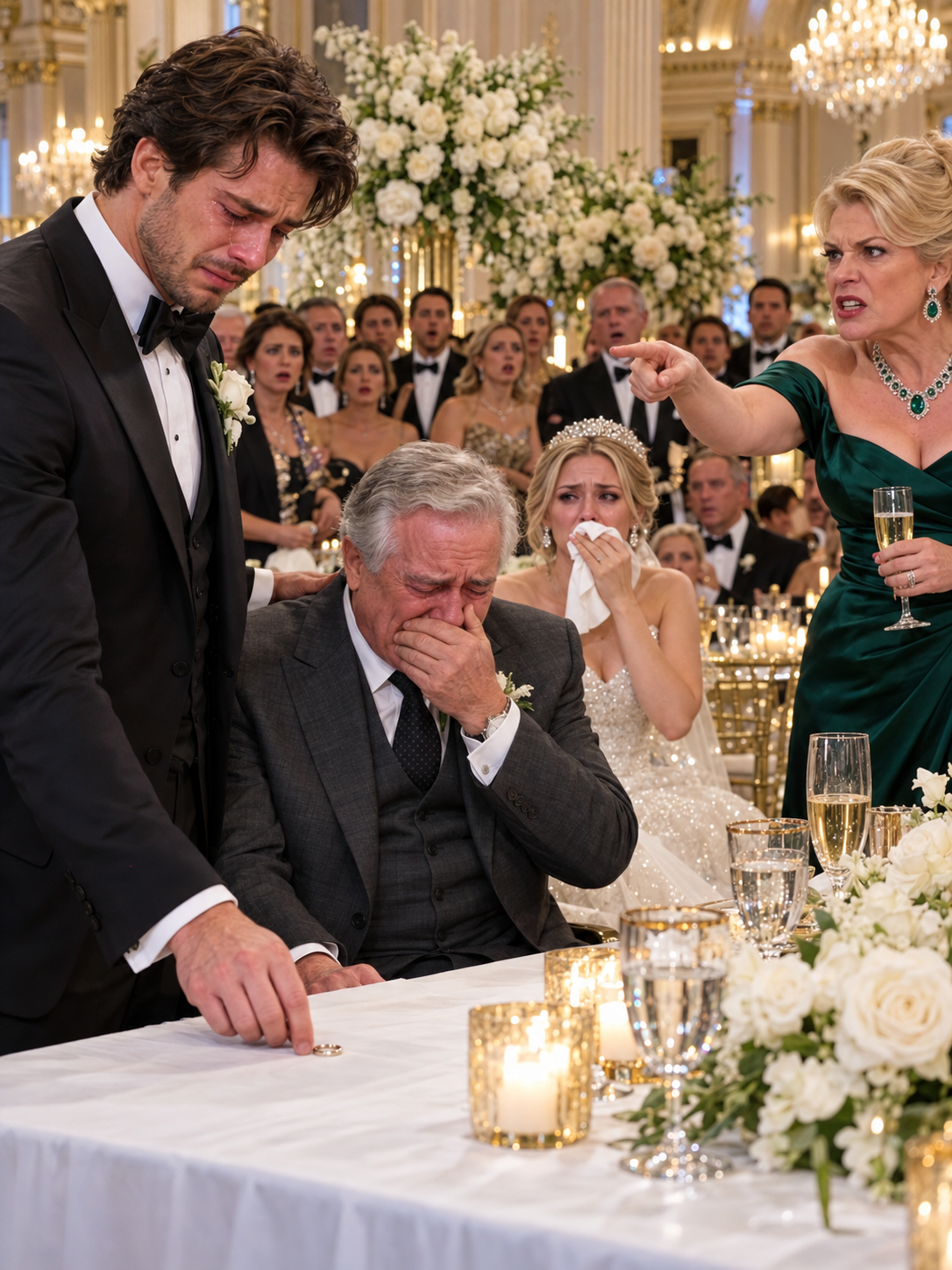
Margot Whitcombe stood up at my wedding and told five hundred guests that my father had gutter blood, and she did it in front of the two investors her husband had spent months trying to impress. What she did not know was that those men had come for my father, not for her import business. She spent the evening performing for a room that had already decided who the important person at the head table was, and she never once looked at the new suit long enough to wonder why.
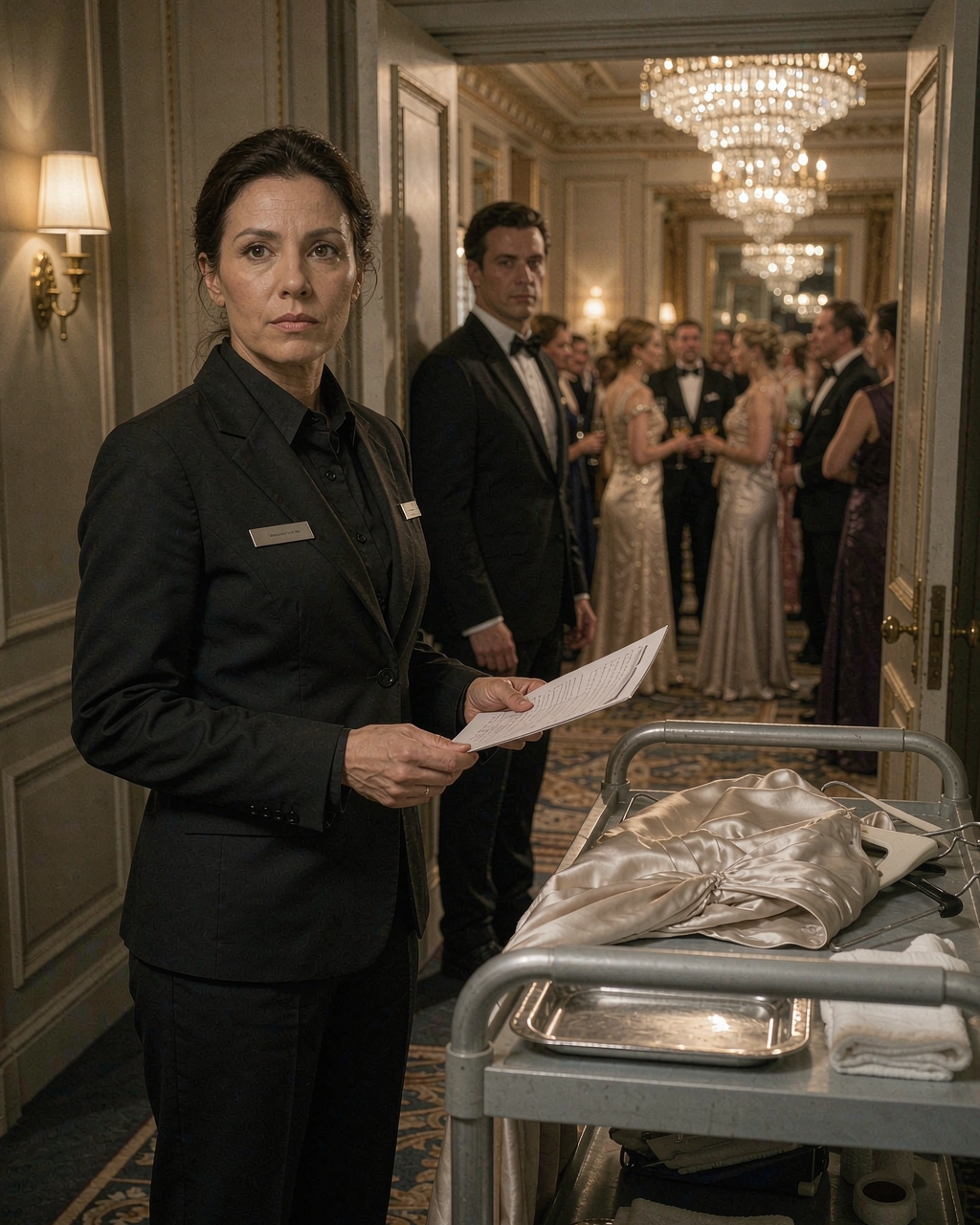
"Some people can wear expensive suits," Margot announced, lifting her champagne glass toward the packed ballroom, "but you can never wash the gutter out of their blood." A few guests chuckled into their palms. Others stared hard into their drinks, suddenly fascinated by anything that wasn't the man she was talking about.
My father stood near the head table with his weathered hands clasped in front of him. Frank Reeves had spent thirty-seven years repairing elevators — double shifts, dark shafts, weekends — raising me alone after my mother died. He had bought his first tailored suit specifically to watch me get married. Under the crystal chandeliers of the Grand Aldridge Hotel, he looked smaller than I had ever seen him.
The Laugh That Ended Everything
"Margot," I said quietly. "Apologize to my father."
She smiled like a queen granting clemency. "Oh, Landon, don't be so sensitive. We're only acknowledging that Camille is marrying beneath her station."
I turned to my fiancée, Camille — stunning in ivory silk, diamonds glittering at her throat. Surely she would defend him. Surely the woman I loved would not let thirty-seven years of sacrifice be dismissed between courses.
Instead she lifted a napkin to her mouth and laughed. "Mom, you're terrible," she whispered. Then, leaning toward me: "Don't make a scene, darling. Daddy invited important investors."
Something inside me went perfectly still. Not hurt, exactly. More like the click of a lock settling into place, the sound a thing makes when it has finally stopped being uncertain.
Ring on the Tablecloth
I stood, took my grandmother's ring off my finger, and placed it on the white linen beside the crystal. "You're right," I told Camille. "No scene. We're done." Then I offered my father my arm and walked him out past five hundred stunned guests, a priest, and a five-tier cake nobody would ever cut.
In the parking lot, Dad kept apologizing. "I ruined your wedding, son." I kept telling him the only true thing I knew: "Dad, she didn't insult you. She introduced you. I finally met everyone."
What Margot Didn't Know
Here is the detail Margot missed while she was performing for her ballroom. The "important investors" her husband had invited that night — the Fenwick Group, the two partners from Hartwell Capital — were not there for the Whitcombes' import business, as Camille's family believed. They were there because of my father.
Thirty-seven years of repairing elevators had made Frank Reeves a quiet legend in vertical-transport engineering. A decade ago, he had started a small company making a safety-brake retrofit for aging elevator systems — patented, tested, quietly installed in buildings across three states. Hartwell and Fenwick had been circling for months. The wedding, as it turned out, was where the Whitcombes hoped to cozy up to men whose real interest sat at the head table, in a new suit, being called gutter trash.
When Mr. Hartwell left the ballroom twenty minutes after I did, my father's elevator brake was the last thing he wanted to hear about over champagne. The deal Margot had been planning to charm her way into walked out the same door.
The Quiet Collapse
I won't pretend I orchestrated what followed. I only declined to fix it. When the Whitcombes' financing talks stalled, when Hartwell's partners "respectfully withdrew," when the family's flagship accounts began reviewing their contracts, I simply returned every call late and said "I'm sure it's unrelated." It was not unrelated. Men remember who laughed.
Camille called me in November. "My mom ruined everything," she said. "Landon, I panicked. Take me back."
"You laughed, Camille," I told her. "Your mom said the words. You laughed. That's the entire story."
She tried once more after the new year, arriving at my office with a printout of Margot's formal apology — notarized, she noted, as if that were the point. I read it politely and handed it back. "This is for your mother's reputation," I said. "My father's was never damaged. He spent thirty-seven years proving who he is. All she did that night was finally say it out loud." I wished her luck, and I meant it, and I watched the elevator doors close — on a Frank Reeves–inspected cab, running smooth as silk.
My father's company closed its acquisition in March. He signed the papers in the same tailored suit, on his own terms, retaining his engineering team and insisting the deal fund a trade scholarship for kids from working families. At the closing lunch, Mr. Hartwell raised a glass and said the sentence I will carry longer than any inheritance: "The best people in this room were raised by gutter trash. Imagine that."
A Better Ceremony
Last spring, Dad remarried me — not legally, of course, just his tradition. At my small wedding to a woman who asks my father for his opinions, he gave a toast in that same suit: "Son, blood isn't what they said at the ballroom. Blood is who shows up and does the work. Everything else is fabric."
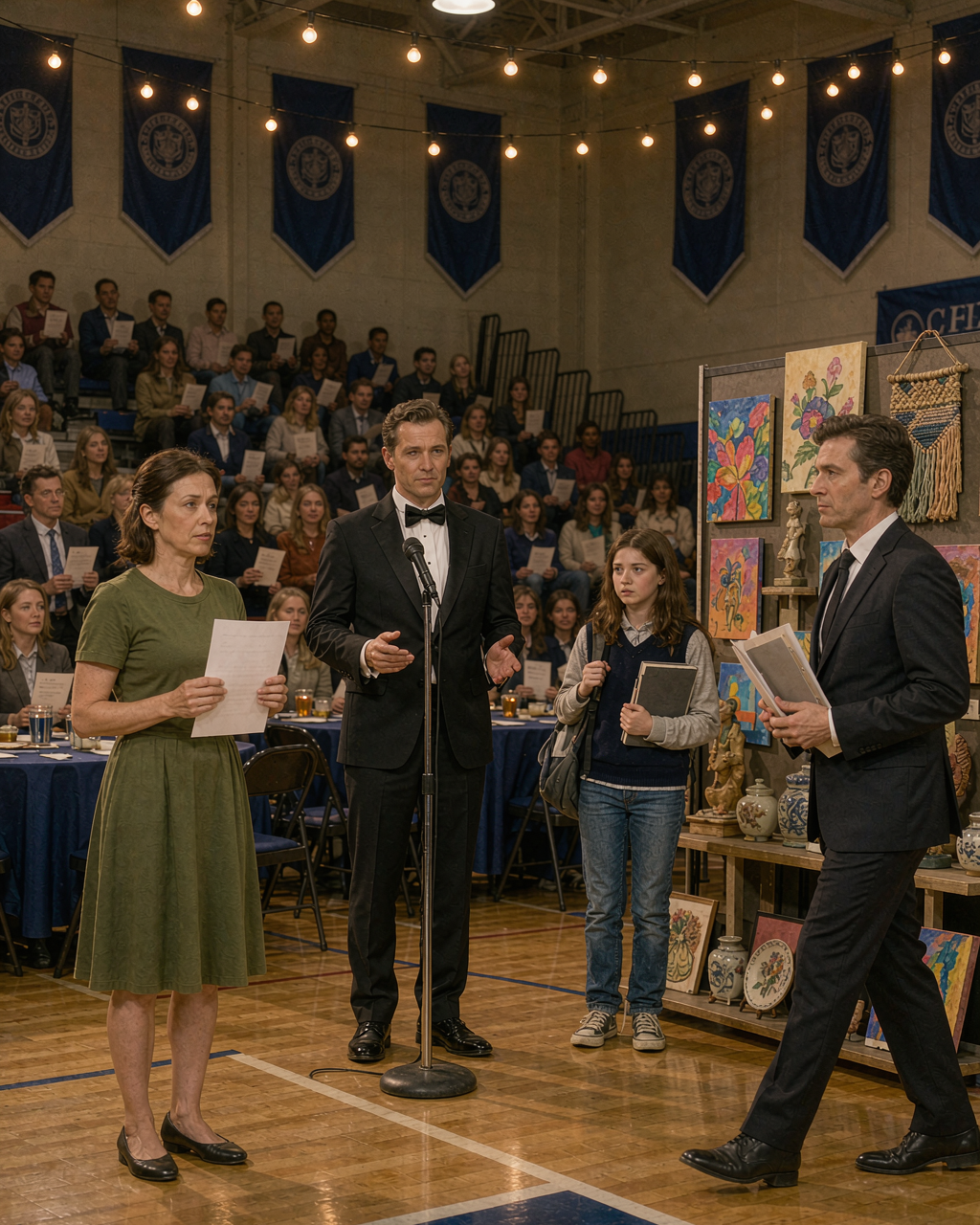
I have thought about that line every time I meet a man in an expensive suit. The fabric tells you nothing. The work tells you everything, and it took me one evening at the Grand Aldridge to learn a difference my father had been demonstrating for thirty-seven years without ever mentioning it. He never asked Margot for an apology after that night. He did not need one, and I understand now that the men who need apologies are usually the ones who have not yet done the work. My father did the work. The room knew it before he stood up, and the only person who had to learn it the hard way was the woman holding the microphone.