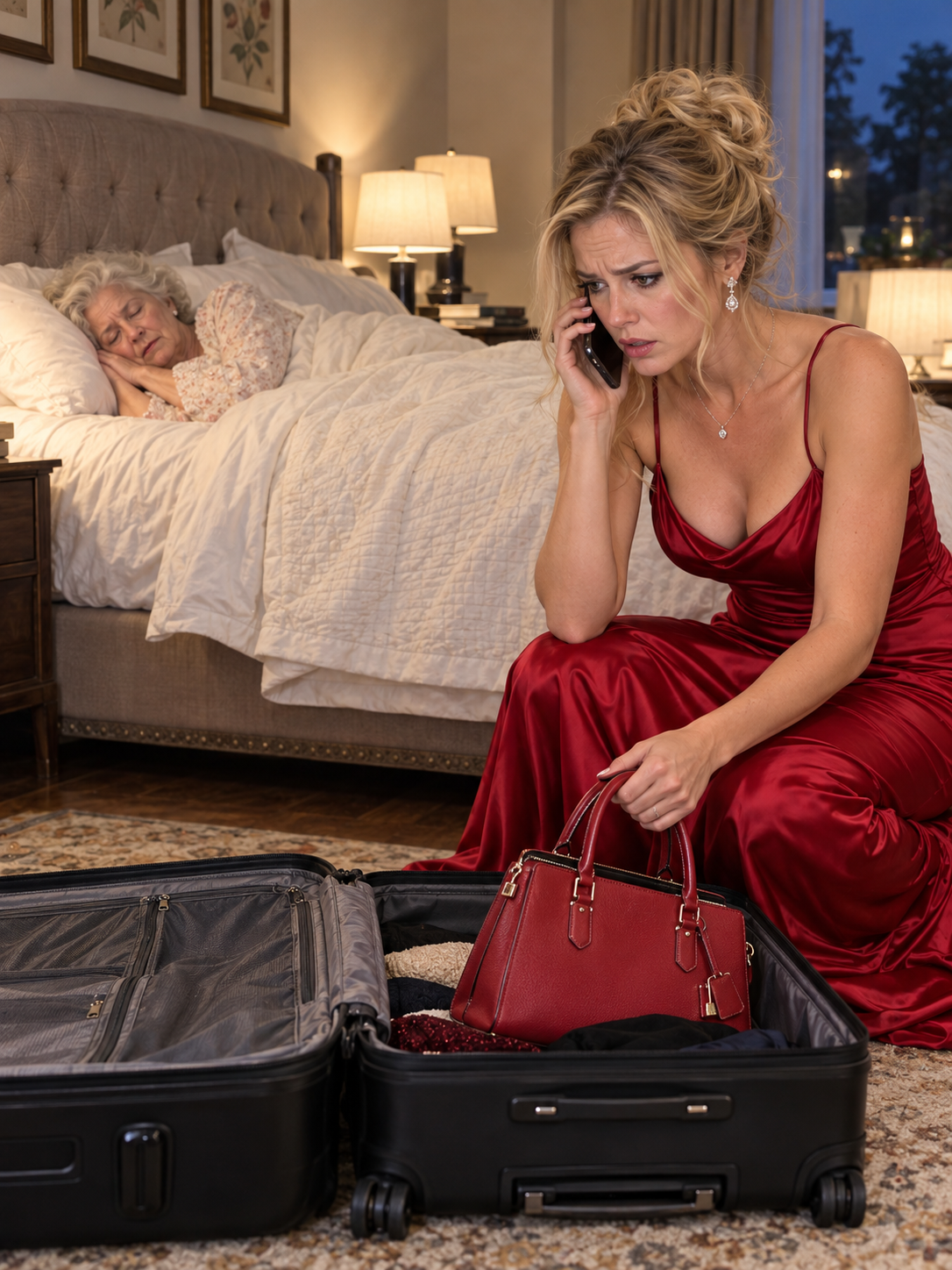
At 12:17 a.m., I watched my daughter-in-law unzip my suitcase and slide a black pouch under my folded sweaters, certain I was asleep. Then she stepped into the hallway and whispered into her phone: "It's in her carry-on. Tell airport security at six." I kept my eyes shut and my breathing even, and I did the only thing I have ever been good at under pressure. I started building a case.
My name is Joyce Hartman. I am sixty-three, recently retired after three decades with the federal government, and apparently the easiest woman in America to underestimate. I spent twenty-eight of those years catching fraudsters, which means Kendall had just committed a felony in front of the one person in the family trained to see it.
The Setup Began Three Months Earlier
The trap did not start that night. It started with a power of attorney. A week before my visit, Kendall slid a document across the kitchen table and called it routine estate paperwork. I read every line, the way I read every affidavit for twenty-eight years, and declined politely. Her friendliness evaporated like water on a hot skillet.
Before that, there was the house. Kendall had been pushing me for months to sell the lakefront property Walter and I bought thirty years ago. "You're getting older," she would say. "Managing a property is complicated. Corey should handle everything." Corey, God help him, usually just stared at his shoes. I noticed the shape of it long before I could prove it: every suggestion arrived dressed as care, and every one of them ended with my name off a document.
That evening, over dinner, I mentioned that my flight to Denver left at seven thirty in the morning. I was going to see my younger sister, who was recovering from surgery. "Don't oversleep, Joyce," Kendall said, smiling over her wineglass. "Airport security can be terribly strict." The remark bothered me for hours without my being able to say why. By midnight the reason was lying in my suitcase.
What I Did While Pretending to Sleep
I waited ten minutes after her footsteps faded, then turned on the bedside lamp and opened the bag. The pouch was black, zippered, and heavy for its size. Inside were several small plastic bags of a white powder and a rolled wad of cash held with a rubber band.
I did not touch the bags. I used a laundry pen from my purse to lift a corner, photographed everything with the timestamp metadata switched on, and wrote down the pouch's position, depth, and orientation in the suitcase. Twenty-eight years of case files had taught me one rule: what you cannot describe precisely, you cannot prove later.
The plan assembled itself as I sat on the guest bed. An arrest at a security checkpoint for controlled substances, in a state with mandatory minimums, would mean detention and a competency evaluation for a sixty-three-year-old widow. After that, a quiet guardianship filing would freeze me out of my own assets while Kendall produced either the power of attorney I had refused to sign or a forged version of it. Every step depended on me being too frightened to think. That was her error, and it was a large one.
The Checkpoint
At six I checked in as though nothing had happened, because the only way to make her plan visible was to let it run. Two Transportation Security Administration officers and a plainclothes detective met my bag at the scanner. The pouch came out on camera, in sequence, exactly where I had documented it.
I gave my statement and handed over the photographs. The detective looked at my federal pension paperwork, then at the timestamps, then at Kendall's phone records, which Regina's team had already pulled a warrant for by eight fifteen. The call she made at 12:19 a.m. went to a private investigator she had hired, a man with two prior ethics suspensions, who was waiting at the airport to photograph my arrest for the guardianship file.
That detail stays with me. She had not gambled on my arrest; she had scheduled a photographer for it, the way other people schedule a christening.
The Kitchen Table
I did not press charges that morning, which surprised everyone, including my lawyer. I drove home instead, sat my son down at his own kitchen table, and laid the photographs out one at a time. Corey went gray. He admitted he had known Kendall was pushing for the house. He swore he had no idea about the airport. "Mom, I swear on Dad's grave, I didn't know."
I believed him, mostly. Then I told him what he needed to carry for the rest of his life. "Your silence was the door she walked through. You watched her push me for eight months and you stared at your shoes. Shoes don't protect anyone, Corey." He did not argue.
Kendall was arrested at her office that Thursday and charged with possession with intent and conspiracy. Once her phone was fully searched, the whole architecture sat in one place: messages with the investigator, drafts of a guardianship petition, and a note listing my assets — the house, the brokerage accounts, Walter's retirement benefits — with a column headed post-arrival. There is a particular silence in a courtroom when everyone understands the plan at the same moment. I have heard it once in my life.
What I Kept
Kendall took a plea deal. She avoided the worst of the sentencing guidelines partly because I asked the court for accountability rather than vengeance, a distinction I had to explain to people who thought I had gone soft. I wanted her responsible for what she did rather than punished into a story about how unfairly she had been treated.
I sold nothing. I signed nothing. I still have the lake house, and my sister comes every June, and we sit on the screen porch watching the water Walter and I chose together thirty years ago. Corey and I are rebuilding something quieter and more honest, one Sunday at a time.
To any widow with a helpful daughter-in-law and a pen full of documents: read the paper before you sign it. Photograph what you would otherwise have to describe from memory. And pay attention to the person rushing you, because urgency is the oldest tool in the trade. It is not saving you time; it is spending yours.