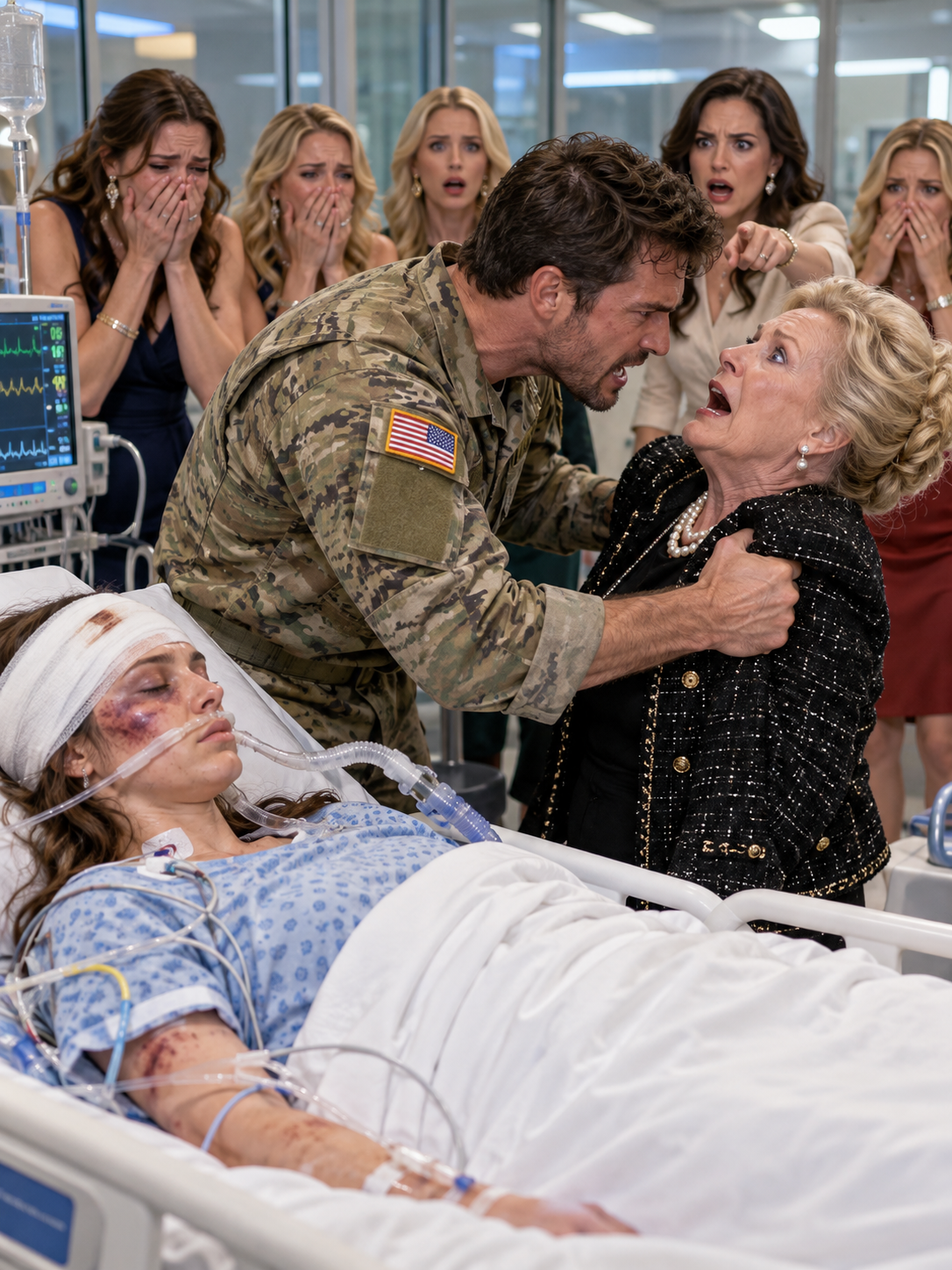
For four years, Preston Lyle had been the perfect husband: attentive, protective, generous to a fault. He drove his wife to her three-month ultrasound holding her hand, talking about baby names, an ivory nursery, an Italian crib shipped before Christmas. Then he left the exam room for coffee, the door didn't quite close, and Reese — strapped to a steel table — heard the voice that wasn't his.

The Conversation Through the Door
"Is everything ready?" the cold voice asked. "Yes, Mr. Lyle," Dr. Ellison answered. "The staff who might ask questions have already left the floor." Then the sentence that reorganized her entire marriage in real time: "Get rid of the baby — and make sure she can never become a mother again."
Reese lay on the table with her wrists strapped down, processing the arithmetic of her situation: her husband of four years was paying her doctor to terminate her pregnancy and sterilize her, the staff had been cleared, and the needle was already moving toward her arm. Her body — she'd describe it later with a survivor's precision — went somewhere calm. She didn't scream. She'd learned, somewhere in four years of perfect marriage, that Preston's world ran on the assumption that she was helpless. The assumption was the flaw in his design.
The Button in the Jacket
Because Reese had done something Preston never thought to check: she'd come prepared. Inside her jacket, against her wrist, was a small button — and she bit down on it as the needle approached, transmitting a signal to a recipient Preston had no idea existed. Her story, and the reason she'd been quietly preparing for months, threads back through the marriage: the controlling drift disguised as devotion, the isolated friends, the finances restructured in his name, the private clinic in Georgetown chosen — she now understood — for its privacy.
She hadn't known what was planned. But a woman married to Preston Lyle had learned to plan for everything.
Who Received the Signal
The signal's recipient — her story's hidden architecture — arrived faster than Preston's plan could complete. Within minutes, the clinic that had cleared its floor of witnesses was receiving visitors who hadn't been cleared by Dr. Ellison: the people Reese had spent a year quietly assembling, the evidence chain she'd been documenting since the first incident she'd never reported, the recordings she'd kept the way cautious people keep them. Preston believed his wife was helpless on that table. He'd been married, all along, to the person who would dismantle him — and she'd spent four years letting him believe it, because the disassembly required him comfortable.
The Reversal
The aftermath inverted every element of the ultrasound room. The sterilization that was supposed to end her motherhood ended Preston's freedom; the medical conspiracy became the prosecution's centerpiece; and the doctor who'd cleared his floor learned that the staff "who might ask questions" had already asked theirs, in writing, months earlier. Reese's pregnancy — the thing Preston tried to erase — continued under different protection. The baby he wanted gone is the reason he's gone: the ultrasound, his own chosen appointment, was the event that triggered every safeguard she'd built.
The Lesson in the Jacket
Reese tells the story without relishing it, which is what makes it travel. Her point isn't the revenge; it's the preparation. The button, the recordings, the quiet documentation — none of it required believing the worst in advance. It required refusing to be unprepared for it. "He planned for a helpless wife," she says. "He forgot to plan for a careful one." The needle never reached her arm. The signal reached where it was aimed. And the man who thought he was ending a mother's story learned, in the space of one afternoon, that she'd been writing a different ending for months — with a button smaller than his wedding ring.
The Year of Quiet Preparation
The backstory that makes Reese's button possible deserves its telling, because it's the part readers most want to understand: how does a woman married to a controlling husband prepare an escape architecture without triggering it? Her account, delivered to investigators, describes a year of small, deniable acts — the old phone kept 'for the gym,' the documents copied one folder at a time, the trustworthy person identified and briefed in vague terms, the recordings made on days Preston was traveling. Every step was invisible inside the marriage's ordinary noise. The button was the last piece: a signal she could send while strapped down, if the worst-case she'd been preparing for ever arrived.
It did. And the preparation converted the worst day of her marriage into the best day of her legal case. Preston's team had planned for a terrified wife, a cleared clinic, and a compliant doctor. They had not planned for evidence that was already in third parties' hands before the procedure began. The signal wasn't a rescue flare, her attorney noted — it was a starting gun. The clinic's emptied floor meant the wrong people had left. The right ones arrived in minutes. Four years of marriage ended, and a year of preparation finally spoke.